Thursday, March 13, 2014

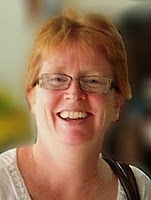
PPWC 2014 Q&A - Gail Carriger

Gail Carriger, Author, Keynote


1. What was the defining moment that made you realize you wanted to be an author?

The moment my best friend had a short story accepted. She was 15. I figured if she could do it, so could I. Two years later I sold a short to the same market. She now works in the publishing industry, so I’m still trailing behind.

2. What is the one thing you cannot work without? What is your creative vice?

Tea.

3. If you could 'revive' any literary figure from the past for a one hour conversation, who would you choose?

Oscar Wilde.

4. What is one of your more notable or unusual conference or convention experiences?

TeslaCon is a full immersion steampunk event. I was expecting it to be more like a standard convention so, at first, I was overwhelmed. Soon, however, I started thinking about the same way I would a Renaissance fair, then I really got into it and had a wonderful time.

5. If we asked your friends and family to compare you to a cartoon character, which would they choose, and why?

She-ra, I hope. Because she's awesome.

6. What is one thing would you like aspiring authors to know about the road to success?

That when you pursue a career producing a creative product you must learn how to manage a small business. Most of my time every day is not spent writing it's spent managing the business around making myself a successful author.


About the Author/Keynote: New York Times Bestselling Author Gail Carriger writes to cope with being raised in obscurity by an expatriate Brit and an incurable curmudgeon. She escaped small town life and inadvertently acquired several degrees in higher learning, a fondness for cephalopods, and a chronic tea habit.Her books are urbane fantasies mixed with steampunk comedies of manners. Her debut novel, Soulless, won the ALA’s Alex Award and was nominated for the Compton Crook, Campbell, and Locus Awards. Changeless, Blameless, Heartless, Timeless, Soulless Vol. 1 (the manga), Soulless Vol. 2 (the manga of Changeless) were all New York Times Bestsellers. The first in her steampunk Finishing School series for young adults, Etiquette & Espionage, released Feb. 5 2013, was an instant NYT Bestseller. The next book in the Finishing School series, Curtsies & Conspiracies, releases Nov. 5, 2013. She will release the first book in her new adult series, Prudence, in the second half of 2014.Her other hats (neither pith helmet nor fedora) have included tromping the globe excavating ancient cultures, torturing undergraduates with science, and writing cryptic reviews of YA novels for the Horn Book Guide.You can find Gail through her agent, Kristin Nelson of Nelson Literary Agency (www.nelsonagency.com), via her website (www.gailcarriger.com), on Livejournal, Blogspot, Twitter, Goodreads or Facebook.

*A Note From Our Programming Director:*

If you're wondering what kind of workshops will be offered at this year's PPWC, we have updated the sampling on the website.

When you're visiting Pikespeakwriters.com, click on the "PPWC" button, and then "PPWC Workshops." Or use this link: http://www.pikespeakwriters.com/ppwc/workshops/

This is not an exhaustive list. We offer more than 60 workshops on a huge variety of topics, plus 15 Read & Critique sessions (in three different flavors) you can sign up for when you register.

See you in April!

MB

Wednesday, March 12, 2014

Scene Writing Series, Part VII - POV

By Jax Hunter


Greetings Campers, time to move on from Setting. On to Point of View. 

POV. It’s not a topic that comes up much within the screenwriting sources, but, in my ongoing discussion of putting scenes together, I’d be remiss to not touch on POV.

POV, for our purposes, is the particular character viewpoint within each scene. Now, if you’re writing in first person, you will have different concerns than the author that is writing in third person. However, you still need to be concerned a bit with POV.

The rules of shifting POV are changing as writing changes. You will find that most how-to books instruct the beginning writer that he should write the entire novel from one character’s POV. Some say that changing POV for each chapter is acceptable, while a few claim it’s okay from scene to scene. Rarely, you’ll find an “expert” say that it’s okay to head-hop within a scene.

I remember,  as I was learning to write, being nearly hamstrung by all the POV rules. I became the POV Nazi and grumbled when my favorite authors would slip from inside their hero’s head to inside their heroine’s. Now, I’m a bit more relaxed, but I’m glad that I have never lost my awareness for POV.

Last week, I began reading the book Ireland, by Frank Delaney. I have to admit to being a bit thrown by his use of POV. It might simply be that he uses omniscient POV, or it might be he head-hops even within paragraphs - next time you’re at the bookstore, pick up this book and read the second paragraph.  

Here’s the Jax Rule: Know when you’re switching POV and have a good reason for it. Oh, and be clear about it when you change.

How do you know whose POV a scene should be written in? Often, we’re told to write in the POV of the character that has the most to lose in the scene. That’s good advice. But sometimes you’ll want the other character to watch the first character suffer. The best “rule” is to write each scene from the most dramatic POV. Often, what isn’t seen is much more important to show the reader than what is seen. This is especially true when a character is acting “out of character” and you need the reader to know why. Sometimes that means writing the scene from each POV and then choosing the best one. 

Hey, that sounds like great homework to me. Give it a try this month. 

Remember, the POV character can’t see himself  (except for the cliched mirror scene that even Dan Brown used in DaVinci Code) and can only guess what the others around him are thinking. When you’re showing a scene from Rick’s POV, you will only see, hear, smell, and feel what Rick’s experiencing. Rick can THINK that Lily is angry (from her body language and from his expectation of what she’s feeling) but Rick can’t know for sure. 

How many POV’s can you use in a book? The rule of thumb is that you use as few as you can - only main characters and very important secondary characters. I find that, in romance, it’s very difficult to NOT write in both the hero's and heroine’s POV. Aside from that, I like to have at least one “mentor” type character that gets some scenes in his POV. Sometimes, it’s necessary to have a few scenes from the villain’s POV, as well. 

Remember, if you only write from one POV, then that character has to be in the room for each scene. This is also true when writing in first person.

So, again, when can you change POV? My suggestion would be to, at the very least, attempt to keep each scene in a separate POV. I have to tell you, though, that some scenes (especially in romance) will be better with two POV’s within the scene as the characters react to each other. 

When I finally broke down and used two POV’s in one scene, I wondered how to do it so my reader would know who was “speaking.” So I dragged some romances from my shelf and studied them. Most of them shifted POV by simply starting the shift with a paragraph that began with the new character’s name. Since I write romance, I study how romance authors do it; you should do the same with your target genre. You can learn far more from reading good books than you can by reading how-to books.

I guess the upshot is that you simply need to be AWARE of the POV at all times. Recently, I was in the midst of edits for Rick and Lily’s book that comes out in September. My line editor caught each POV change within a scene and I had to defend each one. One I changed, the rest I defended successfully. 

Okay, enough said about POV for now. If you need more information, I send thee to the Google. (Before I leave, though, you have to check out this article on POV, it’s a scream.)

Until next month, when we take a look at set dressing, BIC-HOK (Butt in Chair - Hands on Keyboard).

Jax (www.jaxmhunter@gmail.com)

(This series first ran in the Rocky Mountain Fiction Writers newsletter in 2005.)


About the Author: Jax Hunter is a published romance writer and freelance copywriter. She wears many hats including EMT, CPR instructor, and Grammy. She is currently working on a contemporary romance series set in ranching country Colorado and a historical romance set in 1775 Massachusetts. She lives in Colorado Springs, belongs to PPW, RMFW and is a member of the Professional Writer's Alliance.

Tuesday, March 11, 2014

PPWC 2014 Q&A - Jim C. Hines

Jim C. Hines, Author, Keynote


1. What was the defining moment that made your realize you wanted to be an author?

There really hasn't been any single defining moment. Getting my first rejection letter was certainly one step along the way. I had deluded myself into believing this writing thing was easy, and that I'd send out my stories and the money and fame would come rolling in. So when that rejection showed up, my gut-level response was, "Oh yeah? Well I'll show you!" That actually worked pretty well for me as motivation to keep writing and improving. (And I'm happy to say I eventually ended up selling two stories to that same editor many years later.)

2. What is the one thing you cannot work without? What is your creative vice?

At this point, I'd have a very difficult time writing and being a writer without the Internet. I know it can be done, and that people produced many amazing works of art without the convenience of Google and Wikipedia and social media sites where you can post things like, "Help! I'm writing a scene where a magic-using librarian has to read a book underwater. Is that even possible, and if I wrote it, would anyone believe it???"

3. If you could 'revive' any literary figure from the past for a one hour conversation, who would you choose?

Janet Kagan. She only wrote a handful of books, but she was a very kind human being, and we corresponded by email a lot when I was starting out. She offered advice and encouragement and support when I needed it. She passed away in 2008, and I never got the opportunity to meet her in person and thank her.

4. What is one of your more notable or unusual conference or convention experiences?

When I was Guest of Honor at Penguicon, they made "Troll Toe" flavored liquid nitrogen ice cream in my honor, using marshmallows and squid ink. It actually tasted pretty good, though it was disturbing to look at.

5. If we asked your friends and family to compare you to a cartoon character, which would they choose, and why?

I suspect they'd pick Snoopy. I'm a huge Peanuts fan, and as a writer, I can tell you that Snoopy gets it.

Plus, if you read the strips, Snoopy's doghouse is clearly bigger on the inside, which suggests it's actually a TARDIS, and that appeals to the Doctor Who fanboy in me.

6. What is one thing would you like aspiring authors to know about the road to success?

The fact that it is a road. Nobody's born knowing how to write. You wouldn't just decide to be a brain surgeon, grab a hacksaw out of the tool box, and start rewiring people's mental hardware. It takes time and practice and persistence. Writing is a skill, just like anything else, and the more you work at it, the better you're going to get.


About the Author/Keynote: Jim C. Hines is best known as a fantasy novelist and the guy who did those gender-flipped SF/F cover poses. His first novel was Goblin Quest, the tale of a nearsighted goblin runt and his pet fire-spider. Actor and author Wil Wheaton described the book as “too f***ing cool for words,” which is pretty much the Best Blurb Ever. After completing the goblin trilogy, Jim went on to write The Princess series, four books often described as a blend of Grimm’s Fairy Tales with Charlie’s Angels. He’s currently working on the Magic ex Libris books, which follow the adventures of a magic-wielding librarian from northern Michigan.He’s also the author of more than forty published short stories. His first professional story sale was the award-winning “Blade of the Bunny,” which took first place in the 1998 Writers of the Future competition and was published in Writers of the Future XV.Jim is an active blogger about topics ranging from sexism and harassment to zombie-themed Christmas carols, and won the Hugo Award for Best Fan Writer in 2012.He has an undergraduate degree in psychology and a Masters in English, and currently works for the State of Michigan. He lives with his wife and two children, who have always shown remarkable tolerance for his bizarre and obsessive writing habits. (The cats, on the other hand, have no tolerance whatsoever, and routinely decide to walk across his desk when he’s trying to work.)

Monday, March 10, 2014

How to Become a Professional-Level Writer (A Check-In)

By DeAnna Knippling


I don’t know that any of us will ever stop searching for “the magic secret to forcing people to pay you for your writing.” I suspect looking for the magic secret is human nature, something having to do with the fact that when people talk about their successes, it’s the unusual events in their careers that stand out, not the mundane details.

“Oh!” we say, looking at the events that stand out. “That’s the reason they succeeded as writers.”

We see things from a twisted perspective - after the writer has had success (often, after the writer has had a breakthrough success and is selling millions of books). We see the major milestones, as they appear in retrospect: the years of revising, the steps that the writer took to publication (whether indie or traditionally or both), the blogs. Oh, yes, we see the blogs.

We see all that and think, “That’s how they succeeded.” We don’t think, “Just think of how much better they could have succeeded if they’d done it differently.”

Sometimes the authors themselves can’t see what led them to success, either. They think their books are selling because they got lucky, because they got a certain number of reviews, because they did what it took to get their books on Amazon’s bestseller lists, because they bought ads, because they blogged, tweeted, Facebooked, etc. It must have been something unusual, right?

No.

It was what the author did, on a daily basis, which was....

Write.

You’ve heard that advice before, yes? Fish gotta' swim, birds gotta' fly, writers gotta' write. Well, if you’re reading this, then more than likely you’ve ignored it. You’ve written a little bit, looked at your writing, fussed around with it, and said, “This isn’t getting me anywhere. It’s got to be something else.”

You’ve studied a bunch of other people’s opinions on writing. You laugh at writer lists. You pass around Facebook photos of hot guys (or chicks) that say, “X hot person says...GO WRITE.” You blog (Aieee! I’m blogging right now!!!). You invest yourself in writing-related activities, but not actually writing. You go for the cheap thrills of anything that makes you feel like you’re progressing as a writer...that is, anything that doesn’t actually take putting your butt in the chair or your fingers on the keyboard.

Eh, I do it too.

But that’s not how you become a professional writer.

A couple of years ago I did a bunch of research on the idea that it takes ten thousand hours to get good at anything. I talked about it at the Pikes Peak Writers Conference. And then...I went home and wrote. My goal now is to write at least a thousand words a day, every day. I’m ahead of schedule for the year; you do the math. And, since I gave that talk, I’ve published (and been paid for) dozens of stories.

Even more importantly, I’m starting to look at my writing and go, “Not so bad, eh?” Yes, that’s right. I’ve even found a cure for the debilitating self-doubt that plagues writers. How do you get over the sense that you’re a fake?

Keep writing; it’ll take care of itself eventually.

Here are Heinlein’s Rules, if you don’t know them:

Rule One: You must write.

Rule Two: You must finish what you write.

Rule Three: You must refrain from rewriting, except to editorial order.

Rule Four: You must put your story on the market.

Rule Five: You must keep it on the market until it has sold.

Rule Six: Start working on something else.

Personally, I would add:

Rule Seven: If you want to study writing, start by taking something good and typing it in.

Rule Eight: Watch out for hangers-on and arrange it so they have limited ability to screw you over. The money flows to the writer, remember. Or, as Harlan Ellison would have it (NSFW).

Rule Nine: If you find yourself spending more than 20% of your writing time doing something that isn’t writing...stop.

This is hard for writers; there are a lot of things that pop up and beg us to work on them. If it isn’t our real lives trying to intrude, then it’s people begging for your time for one thing or another. If it’s not the temptation to be generous, then it’s the temptation to socialize, either online or offline. If it’s not chit-chatting, then it’s trying to tackle the behind-the-scenes stuff, like building a website or going on promotions tours or staring at the numbers of indie books you sold last month or entering receipts or submitting stories, always the submitting stories...

It’s easy to get wound up in that stuff, but it won’t make you a professional writer.

If you’re lost, go back to the beginning.

Write. Once you have written, you can worry about finishing what you write. Once you have finished, you can worry about editing, which mostly involves learning how to leave your work alone. Editing is a different skill than writing, and you probably don’t know it - why not let the pros do it, after they’ve plunked money down on your table? But nobody’s perfect; sometimes you give in to the urge to tinker. Move on as fast as you can, at least.

Then you can worry about submitting, and keeping submitting, and doing more writing.

Then, and only then, and no more than twenty percent of the time you have available to write, do you do anything else...and the first thing you do after you have your writing done is study. Then you worry about blogging, and socializing with other writers, and building your website, and tweeting.

Because you’re in this to become a better writer, right?

I think a lot of people want writing to be all about the garnishes of being a writer. The frilly parsley of hanging out with other writers. The carved rosette tomato of getting praised. The caviar of getting recognized. The edible gold leaf of getting paid gazillions of dollars. The cherry on top of getting to look like a hero while you train the next generation of writers. The extra chocolate sauce swirled on the plate of winning awards and prizes, prizes, prizes! Those things are (or would be) nice.

But those things aren’t the meal of writing, just the garnishes. 

If you haven’t written, then everything else is just something that takes up your time...while you don't become a professional writer.


About the Author: DeAnna Knippling started freelancing in May 2011 and wouldn’t be able to do it without her wonderful family and friends, especially her husband. In fact, she owes a lot to Pikes Peak Writers for helping her be a better writer, especially through the Write Brains, both in the lectures and in meeting lots of other writers.

Her reason for writing is to entertain by celebrating her family’s tradition of dry yet merry wit, and to help ease the suffering of lack of self-confidence, having suffered it many years herself. She also likes to poke around and ask difficult questions, because she hates it when people assume something must be so.

For more kicks in the writerly pants, see her blog at www.deannaknippling.com or her ebook How to Fail & Keep on Writing, available at Smashwords, B&N, Amazon, and OmniLit.

Sunday, March 9, 2014

Quote of the Week & Week to Come

"The greatest sin for a writer is to be boring." -Carl Hiaasen, born March 12

By Wes Washington (Own work) [CC-BY-SA-3.0 (http://creativecommons.org/licenses/by-sa/3.0)], via Wikimedia Commons

This week on Writing From the Peak...

...DeAnna Knippling tells us "How to Become a Professional Level Writer"

...A Q&A with keynote Jim C. Hines

...Jax Hunter brings us the next installment in her POV series

...A Q&A with keynote Gail Carriger

...John Patterson addresses writer's block in "Writer's Block? Get a Creative Hobby!"

...A Q&A with Tiffany Yates Martin

Friday, March 7, 2014

March News & Events

Compiled by Shannon Lawrence, Managing Editor


PPW Events

Note: More information can be found on each of the below events on our Events tab, above.


Early bird pricing for PPWC 2014 has been extended through March 22 due to our website having been down for several days. Be sure to get in while the price is $395! Pricing goes up to $455 after that.

The March Write Brain will be a Q&A with an Agent, that agent being Eddie Schneider, of JABberwocky Literary Agency. He will give a short presentation then take questions after that. Tuesday, March 18, 6:30-8:30 PM, this Write Brain is online only. You must RSVP in order to attend. To do so, go to www.delvewriting.com/rsvp.

Open Critique is Wednesday, March 19, 6-8:30 PM, at Cottonwood Center for the Arts. Get the first 8 pages of your manuscript critiqued. RSVP required for those wanting a critique. 

Writer's Night is Monday, March 24, 6:30-8:30 PM, at Ivywild. Open forum. Come discuss whatever writerly topics you'd like. Food and drinks available for purchase at the venue. 


Other "Local" Events

Delve Writing is holding an online workshop entitled Say it Like a Pro: How to Talk About Your Book Articulately and Enticingly at PPWC or Anywhere. Chris Mandeville will be teaching this course. Price is $20 if you register before February 8. This is a 2-session camp, to be held Saturday, April 5 and Saturday, April 12, 9:00 AM to 11:00 AM MT. It is online only and live. While this is not a February event, the discounted price ends tomorrow, so we wanted to pass it along to you.

Rocky Mountain Fiction Writers has a lot going on! Their monthly free programming will be Think You're Ready for the Colorado Gold? It will be presented by Chris Devlin, March 15, 2:30-4:30 PM. They are holding an online class via Yahoo Groups entitled RMFW Screenwriting 101, presented by Trai Cartwright, March 4 through April 22. They are taking submissions for their anthology through March 14. They are taking conference workshop proposals through March 31. Their retreat is March 16-21.

Colorado Springs Fiction Writers has various meetings throughout at the month at different locations. Visitors are welcome. 

The Rocky Mountain Mystery Writers of America will host Kirk Mitchell, as he presents Cold Cases. Thursday, March 13. Doors open at 6:30 PM. $25 for non-members, dinner and program included in price.

Pikes Peak Pen Women will host Nancy Jurka, who will present Getting to Know You, an intermingling of autobiography and music, March 15, 11:30 AM to 1:30 PM, at Blue Sage Cafe. $23 for non-members, lunch and program included in the cost. RSVP required.

Friends of Pikes Peak Library District is holding their annual Mountain of Authors program, Saturday, April 5, 12:00-6:00 PM, at their East Library branch, on Union Blvd. This event is free.

Springs Writers will be presenting How to Write Back Cover Copy That Sells, with speaker Shelley Ring., Tuesday, March 11, 6-8 PM, at Woodmen Valley Chapel.

Metropolitan State University is holding their Auraria Writers Week, starting Monday, March 10, with On Writing With Jamaica Kincaid. Tuesday there will be a panel: The Publishing Curve: Staying Ahead of it Before You're Thrown One. Wednesday is the Denver Writer's Spotlight.

If there is a local writer's group you'd like to see included in this listing, please feel free to let me know in the comments!


About the Author: Shannon Lawrence enjoys writing mainly urban fantasy and horror, examining the darker side of life. Her flash fiction piece, “The Family Ruins,” is included in the anthology Sunday Snaps: The Stories, andBeyond the Binding, an anthology including her piece, "Spes et Libertas," was just released in e-book only. While her main focus is fantasy and horror, she is working on a Young Adult fantasy novel and also enjoys photographing Colorado scenery, wildlife, and her children. She is also the NCE Director for Pikes Peak Writers, and the managing editor of Writing From the Peak. You can find her atwww.thewarriormuse.com and on Twitter as @thewarriormuse.

Wednesday, March 5, 2014

The Serialized Novel – Part 1

By Deb McLeod

The Serial Novel by Deb McLeod

My venture into the land of the serial and serialized novel started with the death of my favorite soap opera. Yes, I was one of the two million loyal fans of All My Children (and I mean LOYAL) who mourned the passing of their lunchtime dose of melodrama. I watched when I could, sometimes going years without seeing the show. But, of course, was able to catch up within a week whenever I came back. As a writer, I loved watching the twists and turns, and marveled at the content churned out every week day about the same characters for over forty years.

Around that same time I began to notice nighttime television was changing. They still scheduled those horrid reality shows and inane sitcoms, but there was an added element to the nighttime drama schedule that was intriguing.

Revenge was a new show and season one was pretty good. My husband and I discovered Breaking Bad, which is a fabulous piece of writing (acting too, but that’s not my focus). The Walking Dead, Orange is the New Black, The Americans, The Newsroom and Boss to name a few. Have you noticed that TV drama written more like a novel these days? Great story lines and in some cases, great writing. TV is coming into its own.

At the same time I was observing television in a new way, I was looking into epublishing. One of the observations I came across was about satisfying ebook fans with quick content. Big-name writers were starting to put out novellas and short stories and extras for their books to keep the interest high while they prepped the next title for release. Amanda Hocking put words out. And out. And out. Like a book every two weeks!

I remembered a conversation I had with Francine Matthews years ago. At that time she had two mystery series going and was able to write a first draft of one of her series in eight weeks. NaNoWriMo showed me what I could do in a month if I made a plan.

So I began to look at television writing as perhaps a model for cranking out content. I know how to do the ‘book in two years’ thing, but I wanted to see how I could do it faster. Of course television writing rooms have more than one writer, but I thought I might be able to find some interesting ways they broke a story and if I could learn anything from the process.

I read a few books, the best of them being:
  • “Writing for the Soaps” by Jean Rouveral
  • “Writing the TV Drama Series” by Pamela Douglas
  • “Small Screen, Big Picture” by Chad Gervich 
  • “Crafty TV Writing” by Alex Epstein.

Add into the mix of television research, one of my book club buddies introduced me to Blake Snyder – another life-changing experience – and I began to get my process down. Having been a die-hard pantser, I am now a die-hard plotter.

Deb McLeod's blog on Serial Novels
I am writing a series of novels called The Julia Set: An Angel Thriller. It’s about the angels in and around our world and their attempt to contain a secret that will have far-reaching and long-lasting consequences should it get out. I envision eight books, high tension, with philosophical and spiritual questions, as well as a driving plot. So far it’s coming along well. The first book is done and in edits. However it took me over a year to write.

But the second book was plotted in the two or three days before 2013 NaNo and written in the first thirteen days of the contest. Hoo-rah!

So what does all this have to do with serials and serialization? Well, I’m going to serialize the series.

A true serial is one where the book is being released as the author is writing it. A serialization is a novel that’s already complete but is released in increments.When I build an audience for my thriller, I may join the ranks of ebook authors who are writing true serials. But for now I’m just trying to master the craft of serialization which has to fulfill the serial requirements.

And there is a craft to it: the cliff hanger, the catch-up, the openings of every new section. Each episode should stand on its own but also draw the reader through to the cliff hanger that sets up the next episode or book. There’s the dreaded third episode I’ve been reading about where writers often flail and fans drop away. There’s pricing issues to consider. And publishers who are stepping into the serial market.

Join me in these next few blogs while I attempt to become a serial novelist and explore the serialized novel and the market. I'll be writing about the how-to's, the history, the craft elements and the publishing. Stay tuned...

(To read Part II, click here.)


About the Author: Deb McLeod, is a writer, creative writing coach and founder of The Writing Ranch. She has both an MFA and a BA in creative writing. She has been teaching and coaching for over ten years. Deb has published short fiction in anthologies and journals. She has written articles and creative nonfiction. Deb has been a professional blogger, tech writer, graphic artist and Internet marketing specialist.  

Monday, March 3, 2014

March Letter From the Editor

Hello, and welcome to March! Time of rain showers (or, as in the case of Colorado, typically, month o' snow.) Are you hoping for one of those monster blizzards we occasionally get, or ready for spring?

Courtesy of OCAL at clker.com

When we hit the beginning of the year, we jump in with goals, but spring is also a time of new beginnings. It's also a time of spring cleaning. Why not apply that to your writing space? Does your office need a little work? Could you be more organized? Is your email inbox cluttered?

Courtesy OCAL, clker.com
A positive thing to do is to look at how you're organizing your writing, your writing space, your files, and your time. Maybe you need more time, or you need to switch it up to work around some other things. Maybe you haven't been documenting submissions of your work, or you've saved a bunch of copies of one piece of writing, and it would be good to go through and put these in files so you don't have to dig to find the latest version of your WIP, article, short story, poem, etc. Now's a great time to cast an eye over how you're doing things, whether you're keeping up with the goals you set in January (or whenever), and whether anything needs to be changed or updated.

We're actually doing a little rearranging around here. I'm looking for someone who would be interested in taking over as Managing Editor of Writing From the Peak. You need to be organized, able to keep to deadlines, comfortable with editing and giving feedback to columnists and guest posters, and willing to work with various other departments in Pikes Peak Writers to insure your information is accurate and timely. If you might be interested in this position, please contact editor@pikespeakwriters.com. Please note that this is a volunteer position, but it's also a great position to have if you enjoy reading great posts on writing, and if you'd like to be a part of the Pikes Peak Writers team.

Take a moment to share how you're doing with goals, and what you think may need reorganization!

~Shannon Lawrence
Managing Editor, Writing From the Peak
PPW Director of Non-Conference Events


Sunday, March 2, 2014

Quote of the Week & Week to Come

“I like nonsense, it wakes up the brain cells. Fantasy is a necessary ingredient in living, It's a way of looking at life through the wrong end of a telescope. Which is what I do, And that enables you to laugh at life's realities.” -Dr. Seuss, born March 2

By New York World-Telegram and the Sun staff photographer [Public domain], via Wikimedia Commons

This week on Writing From the Peak...

...Our March Letter From the Editor

...Deb McLeod brings us the first part of her look into "The Serialized Novel"

...We share March news and events

Friday, February 28, 2014

Countdown to Conference - Taking Advantage

By M.B. Partlow


Take Advantage of Me!

Well, not me, personally. I have teenagers for that, thanks.

The "me" I speak of is the 2014 Pikes Peak Writers Conference. In particular, there are four different opportunities that offer a way to get some professional feedback on your work.

The first three are for those who haven't quite completed that manuscript.

For the absolute lowest stress possible, we offer R&C (Read & Critique) Author. This is a closed session, meaning the only people in the room are: the moderator, the published author giving feedback, and eight lucky attendees. You bring three copies of the first two pages of your manuscript. You may give the title and logline at the beginning. Example: "Bullwinkle Must Die is a noir mystery set in cyberspace. When someone threatens Bullwinkle's life, it's up to Boris and Natasha to save the day and prove their innocence." You read it aloud, seated at the table, and the author gives you immediate feedback and helpful comments. Because this is a smaller, more intimate setting, there's more interaction between you and the author in your session.

Our time-tested favorite is called R&C X. Why X? Why not? In this session, everyone who has signed up in advance will give two copies of their first page to the moderator. When your name is called, you stand up and state your title. It's acceptable to give your genre, perhaps word length, and a brief logline. Example: "Life Among the Frogs" is a 90,000 word romance. When a girl has kissed all the frogs in her hometown, where does she look for love?" Then you read that first page aloud. You may sit or continue to stand (your choice) while the agent or editor faculty member gives you their immediate feedback. This session is open, meaning anyone can attend. It's a great way to suss out an agent or editor you're going to be pitching to, which is why we allow audience members who are not participating in the R&C to attend. The agent or editor may ask you a question or two, but there's not really time for lengthy questions.

The latest and greatest is R&C 123. Similar to the X version, you hand over four copies of your first page to the moderator. It's perfectly acceptable to have the genre and logline at the top. Something like "The Litterbox Conundrum is Science Fiction. When all the cats on Earth reveal their hidden opposable thumbs, who will be left holding the business end of the pooper scooper?" Then our extremely talented designated reader will read the submissions, one by one, to a panel consisting of one agent, one editor and one published author. The panel will give feedback on their first impressions. No questions and no stress for the writer, because nobody knows who it is. You don't have to worry about your knees knocking or your voice cracking.

Two things to bear in mind about R&C  sessions. First, when you hand over your precious manuscript pages, they'd better be in standard manuscript format. You know the drill: 1-inch margins, 12-pt Times New Roman or Courier font, double spaced. The moderator makes sure that everyone involved gets their fair share of time, so you aren't going to slip in single-space 7-point font and get away with it. (Note: on the copy that will be read aloud, feel free to make the font as large as you want.) Second, we aren't able to match you with specific authors, editors and agents. We ask you to specify what genre you're interested in, and we match you up from there.

Wait. I said R&C was open to finished or unfinished manuscripts. What about Pitching?

Pitch is for those with completed manuscripts. You show up at the Pitch sign-in desk 5-10 minutes before your designated pitch time, so you have time for a breath mint and wiping your clammy palms on your jacket. You will be ushered into the pitch room in an orderly manner, where you'll find your designated editor or agent, introduce yourself, and tell them about your book. At the end of your designated time, you will be ushered out in an orderly manner. (We're on a tight schedule, so please don't make us get out the cattle prods to remove you from your seat.)

Before you dismiss the entire concept of traditional publishing and roles of agents and editors, think again. These are industry professionals. These are the people who work every single day with new authors. They know what's out there. They know the marketplace. They know what's been done a million times and, like it or not, they know if your storyline sounds unique and interesting or not. This is a great opportunity to practice speaking in a professional manner about your book. Just because an agent or editor says, "Send me your first 50 pages" doesn't mean you're committing yourself to that agent or that editor. But isn't it nice to have options? And get some skilled, experienced feedback?

There is a beauty to each of these approaches. In R&C Author, you get advice from a fellow author, someone who has been in your shoes and is rooting for you to succeed. In X, there is something terrifying and yet exhilarating about reading your work out loud to others. It gives you an ownership of your words like nothing else can. In 123, you will hear your words through someone else, and there is nothing more eye-opening. You will have an immediate sense of what you did right and what you can improve, because the words aren't filtered through the voice inside your own head. And preparing for Pitch will make sure you understand your work backward and forward.

If you've never tried a Pitch appointment or an R&C session, consider signing up for one (or both) on your registration form. You can find all the details at pikespeakwriters.com about format and formalities. You'll have fun, you'll step outside your comfort zone, and you'll come out of it with a better handle on your work. All that, and we don't charge extra for it!


About the Author: MB Partlow, 2013 Programming Director for the Pikes Peak Writers Conference, is hard at work getting fantastic speakers and participants for the conference.  You can reach her at programming@pikespeakwriters.com or find more information on the 2013 Pikes Peak Writers Conference at pikespeakwriters.com.

Wednesday, February 26, 2014

The Ability to Write - Nature or Nurture? Part II

By Pete Klismet


In Part I of this article, I explained how important a person’s writing ability is to the eventual solution and prosecution of crimes. Having seen a lack of this over the course of many years, I decided to explore it in a more systematic manner.

Since research on the ability to write would be helpful, I decided to start mine by asking my wife a simple question. “Was your mother a good writer?” My wife and her sister both are excellent writers, more than able to convey their thoughts, whether in an email or some other form of written communication. For the record, my wife’s answer was “Yes.” I thought that was an excellent start to proving my theory that the ability to write is inherited, thus genetic.

Believing this topic deserved more extensive research, I asked myself, “Was my mom a good writer? How about my dad?” And the answer to both questions was an unequivocal “yes” for both, despite the fact that my dad had only an eighth grade education (the required standard for the time he was in school). Then I asked myself, “Are your kids good writers?” Again the answer was yes. So I quickly advanced my theory ahead a few more spaces on the board.

Then I asked myself, “Am I a good writer?” And the answer was “I think so.” I know when I was a police officer in California, some of my reports were deemed to be “legendary.” And I always enjoyed writing them. I enjoyed doing research papers in college and graduate school, seeing these as an opportunity to think outside the box. In the FBI it is said that only about ten percent of all agents can put together a complex investigation, explain it in reports, and then write a wiretap affidavit (which is basically longer than the worst term paper you ever did, and has to be reviewed by tons of lawyers). In twenty years, I wrote about ten of them. So apparently I was capable of writing at a high level while in the FBI. 

But, did being able to write good reports, search warrant and wiretap affidavits predict a good writing career? Those reports are generally narrative, and that type of writing doesn’t necessarily translate directly to an ability to write a novel. I found that out with the first book I wrote, which was deemed “horrible” by a literary agent after she read only part of one chapter. I was floored. Result: Writer’s block for about five years. I was a hopeless case. My self-esteem plummeted. My hopes and dreams of someday becoming a best-selling author were dashed. 

Or so I thought. I was living in Cedar Rapids, Iowa at the time, and about twenty miles down the highway was the University of Iowa. Somehow, I found out about their famed Writer’s Workshop, and decided to see if I could attend. No problem. Pay the tuition, attend for two full weeks, and hopefully come out a better writer on the other end. And so I paid and attended. We did a lot of evaluating of each other’s work. When my chapter came up for review, it prompted an extensive lecture by our instructor. And finally the light bulb went on and glared brightly. I remember him saying, “You build a story by using action and dialogue.” You mean narrating won’t work? Nope. But I was really good at writing police reports and stuff like that. Doesn’t matter, that was narrating, and it doesn’t work if you’re trying to advance a story in a novel. Oh, now I understood why I got that scathing rejection – I can write great police reports, but that doesn’t translate to writing a book someone will want to read and which will hold their interest.

It was just the jolt I needed, but then came the problem of adapting my writing style to my newly-learned knowledge. You can’t tell a story with dialogue only, and if you revert to action, you’re back to narrating. This caused a significant paradigm shift for me. I had to see if I had the ability to blend both of these concepts together. And quickly learned it wasn’t as simple as I thought it would be. There was going to be some work involved. I had to ask myself if I had the commitment. The only way to find out was to start writing again. But, don’t write fiction. I didn’t need to do that. All of my years in law enforcement, about fifteen by that time, gave me enough experiences to write more than one book. In fact, I now have about eight in my head. It’s a tight fit, in case you were wondering. 

I continued my research on the Internet and found there was no shortage of information about the ability to acquire language as an innate ability. But what most of that referred to was people being more able than others to learn new and different languages. I knew that didn’t apply to me and was not what I was trying to discover. I did, however, find some short articles about the ability to write being an inherited trait. Which I was very excited about, except that the answers were clearly maybe or maybe not. That didn’t advance my theory a whole lot, either.

I found a somewhat compelling blog by someone who calls himself “Rodismay.” The blog had a ton of advertising links, so his goal is apparently to teach people to be better writers and make money in the process. There were a number of comments by various people who said they felt their ability to write was “God-given.” Mr. Rodismay also commented, “When I am in the mood, one word heard or read can be expanded into more than 1000 words.” Hmmm, I thought, that sounds a lot like me (and surely some of you). It’s almost like being an alcoholic, by way of analogy: Once you start, you can’t stop. Maybe that’s not the best analogy. A better one might be getting the so-called “Runner’s High.” I’ve had all of these things happen, so maybe writing is akin to an addiction? And maybe, just maybe, I’m onto something here. Research on addictions shows a high degree of predisposition, such that if one is an alcoholic, someone above you on the food chain, whether mom, dad, grandpa, etc., was or is an alcoholic as well. So maybe this guy Rodismay has me headed in the right direction. And maybe I was starting to think outside the box as I wanted to be.

And I continued my research. I’ll explain that and how I tried to connect the dots in the third part of this article.


About the Author: About thirty years ago, a small cadre of FBI agents were hand-picked by the FBI’s Behavioral Science Unit (BSU) to receive training in what was then a highly-controversial and ground breaking concept: Psychological Profiling. Pete Klismet was fortunate enough to have been chosen to become one of the original FBI “profilers.” He received additional training, was temporarily assigned to work with the BSU in Quantico, Virginia, and put that training and experience to work in assisting state, federal and local law enforcement agencies in investigating violent crimes. 

He was named National Law Enforcement Officer of the Year in 1999, the same year he retired from the FBI. For the next 13 years he taught in colleges, and is now retired as a professor emeritus. He and his wife Nancy live in Colorado Springs.


Pete’s award-winning book FBI Diary: Profiles of Evil is available at www.houdinipress.com and www.amazon.com. He plans to release ‘a couple more books’ in 2014.

Sunday, February 23, 2014

Quote of the Week & Week to Come

"The talent of success is nothing more than doing what you can do well, and doing well whatever you do without thought of fame. If it comes at all it will come because it is deserved, not because it is sought after." -Henry Wadsworth Longfellow, born February 27.

Duyckinick, Evert A. Portrait Gallery of Eminent Men and Women in Europe and America. New York: Johnson, Wilson & Company, 1873 from http://utopia.utexas.edu/project/portraits/index.html?img=237
[Public domain] via Wikimedia Commons


This week on Writing From the Peak...

...Aaron Michael Ritchey brings us some rhyming fun in "Dr. Ritchey's New Year You-Can-Do-It"

...Pete Klismet brings us Part II in "Is Writing Ability Innate: Nature or Nurture"

...MB Partlow shares some witty information in this month's "Countdown to Conference"

Friday, February 21, 2014

Sweet Success! M.J. Brett

Compiled by Kathie Scrimgeour


M.J. Brett’s true crime mystery, Truth Lies Six Foot Under (ISBN: 978-0-9748869-8-5, 246 pages, e-book and paperback) was released July 2013 by Blue Harmony Press. The novel is available on Amazon.com as a Kindle edition.


When a struggling student accidentally sees something he wasn't expecting to see, he reports it to the sheriff. From that point on, his life and that of his wife and their four-year-old son are caught up in a whirlwind of danger. Everybody is hiding something. What? and Why? Who blocked investigation? Is there such a thing as suicide by proxy? Who covered up the brutal murders of this young family? Who staged the crime? Who burned the records? What do the banker, the mafia, the university, and the sheriff have to hide? Why does every question lead to threats? At the family's request, an old P.I. and his young protege seek to find answers twenty years later, and they find secrets and lies still seethe out from under, and their investigation becomes more dangerous than they had thought.

Margaret Brettschneider (a.k.a. M.J. Brett) went from soda jerk to ballet dancer to teacher, 21 years of it overseas, to retirement in Colorado Springs. Living on the Cold War Border in Germany brought her in contact with other DoD teachers, and the usual assortment of Aviation, Engineering, Artillery, and Spooks, military men who held back the communist incursions for years. Now, in retirement, she likes to write the true stories from these contacts plus world travel opportunities. She prefers stories she feels need to be written, and this new mystery was a cold case gone horribly wrong that needed to be solved. You can find Margaret at her website, www.mjbrett.com. 

We love to hear of fellow Pikes Peak Writers' Sweet Successes, including story acceptances, winning contests, getting published and book signings. Please email Kathie Scrimgeour at ppwsweetsuccess@gmail.com if you've got a Sweet Success you'd like to share.

Wednesday, February 19, 2014

Take Time to Read - A Reader University Post

By Stacy S. Jensen

This is the second post in a series of 12 ways to help authors (and your writing) by reading.  
 

Last time, in the first in the Reader University series, we talked about Try — new authors, new genres, and new formats.
My second way to help authors and your own writing is to READ:
  • a book
  • a novella
  • a short story
Or read an essay or a long magazine or newspaper feature story.
It’s so easy to get trapped in the “I don’t have time whirlwind” of life. Even when we say this, we are still reading.
I DO read a lot each day. I read a few blog posts, a few Internet news stories, and a ton of emails. Throw in some social media and I’ve read a short story or novella in one “session” on the computer. While much of this is entertaining or educational, I still find myself missing a good story by the end of the week.
Between my library card and my Kindle, I have access to a steady stream of books. This week, I’m making time to read another book in my virtual (Kindle) “to be read” stack —Divergent by Veronica Roth.
I read these books last week (mostly due to being sick and stuck on the couch):
The Fault in Our Stars by John Green (2012)
As usual, I read through a dozen picture books. I was able to get my hands on Flora and the Flamingo by Molly Idle (2013). It’s a wordless picture book — sweet and lightly pink. This book does have flaps, so I’m not sure how the Kindle version of this will work.
Have fun reading this week!
Here’s the first post about the Reader University project.

(This post first appeared on Stacy S. Jensen's blog on January 13, 2014)

About the Author: Stacy S.Jensen worked as a newspaper reporter and editor for two decades. Today, she writes picture books and revises a memoir manuscript. She lives in Colorado Springs with her husband and toddler.

Monday, February 17, 2014

Steampunk Costuming Tips

Friday night at Pikes Peak Writers Conference 2014 is an optional steampunk dinner, where you're invited to dress up in steampunk regalia. Not sure what that entails? No problem! Aaron Spriggs, expert on all things steampunk, is here to give us some tips.

By Aaron Spriggs

Steampunk: What it would have been like if the future had happened sooner. 
First, let’s start with what “steampunk” is, and where it came from. In the 1980s, cyberpunk speculative fiction was all the rage. Author K. W. Jeter told his publisher his next cyberpunk novel would be set in the Victorian age and that it would be a ‘steam-punk’ story, to paraphrase.
Steampunk has been around for over one-hundred years, but was only then codified. In the most stripped down, bare bones sense, it is the outsider or underdog (punk) fighting the system. The ‘system’ can be just about anything, such as government, big corporations, the church, social norms, etc., and it is set in a time period where steam was the dominant, most advanced technology (the "steam" in steampunk). It was solely science fiction, but the recent trend is to include fantasy/urban fantasy into the mix. For me, I prefer my steampunk straight-up sci fi, but I’ve read some great stuff with fantasy elements included.
See "Woman in Black
Dress" below for attribution
The costuming, or cosplay (costume play): Any historical clothing combination from about the 1790s to the 1910s works great. Mixing and blending from cultures around the world is even better. Throw in some goggles (always be prepared for that open gondola/dirigible/train ride), add a splash or two of sexy, and you’ve got a great steampunk outfit.
Costumes trend towards the upper class styles of clothing, but mechanics, engineers, and adventurers are all very commonly found, as well. Remember, classism was alive and well, and can be played up in costumes.
Femmes: Corsets are common for women. They’re sexy and fun, they flout social dictums being worn on the outside visible to all, and they go with just about everything. Itty-bitty hats pinned on are big (big as in popular, not in size - I just said they’re itty-bitty). Parasols work as props, as portable shade/rain protection and as weapons. Don't forget the ever present goggle.
See "Nyah" below
for attribution
Hommes: Pith helmets, bowlers, and top hats are all very common. Canes (sword canes, even, but check with state and local laws….) are an excellent accessory. Tuxedos and smoking jackets with patterns are good pillars in any man’s wardrobe. If you have the time, grow mutton chops! And have I mentioned goggles?
Colors: Anything goes. There is a prevailing attitude for earth-tones, but the Victorians had the full color spectrum to use, and they did so. Historically, they often had dark cloaks and jackets to deal with industrial soot and the new pollutions, but their clothes (from around the world) have always had colors, so don’t be shy. Patterns (such as paisley) and stripes are very popular with steampunks, too. Ignore the snarky “steampunk is when goths discover brown.” Haters gonna’ hate. Remember punk not caring? There you go.
Accents: Gears, watch parts, springs, and the like. There is some snarky-ness to gluing these items on clothing (such as hats and lapels), but I like them. After all, steampunk has taken on an aspect of cargo-cultishness, and thus ‘worship’ of the industrial elements is only natural - and expressing such worship via adornment is very natural. So I say glue that cog on and be proud!
Squid and octopus is a super-strong theme as well, heralding from “20,000 Leagues Under the Sea” by Jules Vern. Again, rings, necklaces, tattoos for the hard core - do it up!
Finally: RAY GUNS!* Among steampunk is the fringe science, pushing the bounds of believability, and ray guns is the vanguard of such tech. Make those ray guns out of anything available: candelabras, tattoo guns, welders, water pistols, nerf guns etc. Do it up. Sneak in a hidden battery and light it up with LEDs, bubbling oil in tubes, vacuum tubes, air cartridges, etc., etc., etc.
Remember, you’re punks. There is no right or wrong. If a hard core fanboy tries to tell you those faery wings ‘aren’t steampunk, turn your punk dial to 11 and give him a quote or two from Blaylock (steampunk author with fantasy elements long before steampunk was defined).
Now get cracking on that anti-kraken semi-aquatic de-hydration auto-illuminating musket, and make sure you have your goggles firmly around your hatband, just in case…
*Note: The Marriott has asked that there be no weaponry, even costume weaponry, brought into the venue.


About the Author: Born before the Lunar Landing in the Land of Enchantment, Aaron has lived in many states of the Union, but has reduced his relocation rate and has lived in Colorado since 1980, all up and down the Front Range and mountains, and currently resides in Denver.

Aaron has published a few short stories and several poems and is sitting on a few novels, like everyone else.

Scientist by day (hazardous waste management in the past, and entomologist/zoologist these days) and poet/musician by night, Aaron has gone on several musical tours around the USA. He plays trumpet poorly and theremin passingly. During the heat of summer, Aaron can be found at Burning Man every year. 


Image Attributions: 

Nyah: By Craig Hatfield (Nyah.  Uploaded by Fæ) [CC-BY-2.0 (http://creativecommons.org/licenses/by/2.0)], via Wikimedia Commons

Woman in Black Dress: By 5of7 (Flickr: Steampunk - woman in black dress) [CC-BY-SA-2.0 (http://creativecommons.org/licenses/by-sa/2.0)], via Wikimedia Commons