Friday, June 13, 2014

Sweet Success! Julie Kazimer

Compiled by Kathie Scrimgeour


Julie Kazimer’s romantic suspense novel, The Assassin's Heart (ISBN-10: 1603819754, ISBN-13: 978-1603819756, 211 pages, ebook and trade paperback), was released March 1, 2014 by Camel Press (imprint of Coffeetown Press). This novel is available at Amazon.


When CIA assassin Hannah Winslow mistakenly kills the wrong man, she vows never to take another life. Unfortunately Hannah’s superiors believe the killing was intentional. Now Hannah is the target. She disappears completely into a new, screamingly dull life, assuming a fake identity, shacking up with an overweight cat, and starting a new career as an ad executive. Hannah’s past finally catches up with her at a company retreat in Hawaii, where her former partner Benjamin Miller has tracked her down. Is it a coincidence that assassination attempts on her life are now as common as rum, suntan lotion, and tiny umbrella drinks? What is the real reason for Ben’s presence? Will he be her savior or her assassin?

J.A. Kazimer is a writer living in Denver, CO. Books include The Junkie Tales, The Body Dwellers, CURSES! A F***ed-Up Fairy Tale, Holy Socks & Dirtier Demons, Dope Sick: A Love Story, SHANK, and Froggy Style: A F***ed Up Fairy Tale, and The Assassin's Heart. Forthcoming books include a new mystery fairy tale series from Kensington Books. She spent a few years spilling drinks on people as a bartender and then wasted another few years stalking people while working as a private investigator in the Denver area. Learn more at www.jakazimer.com or at her blog More Than a Little F***ed Up. 


We love to hear of fellow Pikes Peak Writers' Sweet Successes, including story acceptances, winning contests, getting published and book signings. Please email Kathie Scrimgeour at ppwsweetsuccess@gmail.com if you've got a Sweet Success you'd like to share.

Wednesday, June 11, 2014

Scene Writing Series, Part X - Dialogue

By Jax Hunter


Greetings, Campers, this month, we’re going to take a brief look at writing dialogue. There are entire books on this one subject and I can’t possibly do it justice. But as we’re zeroing in on writing scenes, we really can’t leave dialogue out entirely.

Syd Field, in The Screen-Writer’s Workbook, lists these purposes for dialogue:

1.  To move the story forward
2.  To communicates facts and information
3.  To reveal character
4.  To establish relationships between characters
5.  To comment on the action
6.  To tie scenes together

Does dialogue do all these things at once? Only if you’re a master at it, I suppose. However, let’s face it, every word we put on the page should do many of these things at once. Our dialogue must, as well. So, here are a few of my rules of great dialogue.

REAL OR MEMOREX? Great dialogue is only the illusion of the real thing. If you transcribe real conversation, you’ll lose your audience to boredom. Good dialogue is real dialogue amped up. It only leaves in the awkward silences and fumbling sentences on purpose, to crank up the emotion. Remember, it’s all about emotion. 

CHARACTER. Good dialogue reveals character. It does this with what the characters themselves say and with what others say about them. It does it with silence and pauses and sentences that aren’t finished. It does it with body language, tone, and facial expression. Often, we learn far more about a character by what is left out of a conversation. And sometimes, characters can chat about the mundane while, beneath the surface, conflict churns.

JUDICIOUS EXPOSITION. Exposition within dialogue can be tricky. If we throw too much information and explanation into conversation, our dialogue comes out sounding hokey and completely unreal. Be very careful not to force your dialogue to give your reader information. Author Greg Garrett gives us this “tremendously bad example of exposition masquerading as a dramatic exchange.”

    "I've been so lonely since my husband Ted died in 1991 of cancer. We had been happily married since 1965, when we met while I was working in the Kresge department store on Canal Street in New Orleans."

    "Of course, you poor dear. Thank goodness your son Frank immediately left his job in Pittsburgh as a computer programmer to move back into your house in the Garden District of New Orleans so that he could help you with your clinical depression. Of course, now you are caring for Frank because his wife deserted him and took the kids back to Pennsylvania after the doctor discovered in a routine test that he was HIV positive."

On the other hand, watch how the screenwriter of the movie Witness weaves exposition into his scene in a very natural way. Not only does he teach the “reader” here, the exposition does double duty later when Rachel watches to see if Book will act the same way.

RACHEL: I should tell you these do not have buttons. (shows him) See? Hooks and eyes.
BOOK: Something wrong with buttons?
RACHEL:  Buttons are hochmut.
BOOK:  Hochmut?
RACHEL:  Vain. Proud. Such a person is hochmutsnarr. He is not plain.
BOOK:  (nodding) Anything against zippers?
RACHEL:  (almost blushing) You make fun of me. Like the tourists. Driving by all the time. Some even come into the yard. Very rude. They seem to think we are quaint.
BOOK:  Quaint? Can't imagine why. (She smiles.) Where's the nearest telephone?
RACHEL:  Telephone? The Gunthers across the valley. They're Mennonite. They have cars and refrigerators and telephones in the houses even.

Sigh. I love that movie.

WHO’S TALKING. Make sure your dialogue sounds like the character. A history professor doesn’t speak the same as a football coach. If he does, it reveals a lot about the history professor, doesn’t it? Occasionally, it’s good to mix things up and have a CLICHED character speak in a NON-CLICHED way. 

Speaking of cliches, dialogue is really the only place we can truly get away with using cliches. Because people speak in cliches all the time, our characters can, too. But I would encourage you to use this tool on purpose, not just because you can.

A word about accents. Be very careful with writing accents. Remember, a little goes a long way. It may be better all around to not actually write the accent but to simply mention it from another character’s point of view. In my first novel, Black Ice, my hero was a goalie from Montreal. Here, he meets the heroine. 

“Nice to meet you Miss MacMaster,” he said with a soft French Canadian accent. “Are you not also on the training staff for the team?”

I listened to Patrick Roy (remember him?) at length to discover that he rarely used contractions, so neither did A.J. The real concession I made to his accent throughout the book was occasional non-English syntax.  

“I have done much things to hurt her.” 
“She writes books for childrens.”

If you let them, your characters will write their own dialogue. This can only happen, though, when you know your characters well and if you don’t force them to say what you want them to say. Characters REACT in dialogue - to their own words and to the words, tones, and body language of others. Let the action/reaction model into your dialogue and your dialogue will come to life. 

I have a couple of characters that have a real problem being in the same room with each other. If I put them together, they invariably end up taking pot shots at each other. They totally REACT to each other. Sometimes, they react well, (one brief moment in this scene, which takes place on the dance floor of the local bar, right after a wake) but mostly they just fuel each other, in more ways than one.

            “How’s business?”
            He knew the answer but it might be entertaining to hear her version.
            “I haven’t hit the bottom yet.”
            Interesting.
            “You need a business partner, an infusion of capital.”
            Now she looked up at him, eyebrows drawn together a wry smile on her face.
            “Oh, yeah, that’s just what I need.”
            “I’m serious, Red.”
            “Don’t get your checkbook out, Cruz.  I’m not interested in having another partner, especially one like you.  I may be a slow learner but I do get it eventually.”
            “Ouch.”
            “Ooh, the Golden Boy feels pain?”
            Now he just looked at her.
            “Sorry, guess tonight’s not the time to say that, is it?  Besides, you don’t fly helicopters.  And I don’t own a fixed wing.”
            “You could teach me to fly rotary and I do own a fixed wing.”
            “Tell you what, Cruz.  You can pay me to teach you to fly rotary - I am a certified instructor, you know - and you can keep your fixed wing.”
            The music ended, leaving them standing in the middle of the dance floor.
            “I’ll see if I can fit it into my schedule,” Cruz said and turned away.
            “Yeah, you do that hotshot.”

From: A Good Place to Land - yes blatant self-promotion. What can I say?

This leads me to mention the topic of SUBTEXT. Subtext is speech that is pregnant with meaning. It’s innuendo. It’s the communication that’s going on all the time, just under the surface. Subtext is used to imply the emotion and conflict that isn’t stated outright, and it elevates even the most mundane dialogue with conflict and drama. Next time you’re reading, pay special attention to the conversation underneath the conversation. 

See? I told you I didn’t have room to fully explore dialogue. So, consider this a reminder of things you likely already know. Again, I encourage you to study the fiction that you read. Look for great dialogue and figure out what makes it sparkle. Then, go forth and do likewise.

Until next month, when we take a look at set dressing, BIC-HOK (Butt in Chair - Hands on Keyboard).

Jax (www.jaxmhunter@gmail.com)
 
(This series first ran in the Rocky Mountain Fiction Writers newsletter in 2005.)


About the Author: Jax Hunter is a published romance writer and freelance copywriter. She wears many hats including EMT, CPR instructor, and Grammy. She is currently working on a contemporary romance series set in ranching country Colorado and a historical romance set in 1775 Massachusetts. She lives in Colorado Springs, belongs to PPW, RMFW and is a member of the Professional Writer's Alliance.


Monday, June 9, 2014

Pikes Peak Writers Conference 2014 - Gone But Not Forgotten

By Tena Stetler


www.vectorstock.com 

Yep, I survived Pikes Peak Writers Conference 2014, but barely. I was so tired when I got home that I almost fell asleep in the shower and really don’t remember crawling into bed. 

Now, I have so many things on my to-do-list that I don’t know where to start. I need to spend one hour on marketing, according to Becky Clark. So I re-coded the slideshow on the first page of my website so it faded correctly. Got to make a good impression. Then I wrote out a marketing plan. 

In Linda Rohrbough’s workshop, Turn Your Passion into Profit, we were encouraged to step out of our comfort zone with people and possible contacts for work. She reminded us that if you don’t ask, the answer is always no. So what do you have to lose? This morning I made a list of contacts for freelancing opportunities and will make my way through the list this week. Still more work to do. But it’s a start. 

Then according to Jennifer Lovett, I should have at least 30 posts on my blog. That’s only 26 posts short. I guess I’m a bit behind. But, this one makes it only 25. Headed in the right direction.

During the Read & Critique, Kris Neri gave wonderful suggestions I put to use today to make the beginning of my work in progress pop. Another participant in that Read and Critique session came up after it was over and told me she really liked my story. I can’t tell you how pleased I felt. Yet, another participant stopped me as I was leaving on Sunday afternoon with a creative idea for my Cozy Mystery, which I will be incorporating. Thank you! 

Thursday’s Prequel was murder! Literally. A crime scene was set up complete with an almost dead body. Professionals were present from the  EMTs, FBI, CSI and a profiler to walk us through their responsibilities at a crime scene. It was very interesting and a bit disconcerting.   
  
Kim Killion and Jennifer Jakes of the Killion Group turned up the heat with their sexy book cover designs. (Whew!)  They have 21 years experience in marketing, communications and design. For those self-publishing, they can format your book and create a stunning website.

In the workshop, This May be a Dumb Question, But.. Darby Karchut answered all our questions, fearlessly. She’s a seventh grade teacher, you know. She described the road to publication and all of its potholes, how to make your manuscript the best you can, the secret to crafting that tricky query letter and, finally, promoting the heck out of your book.

Bonnie Hagan’s heartfelt tribute to the writers that we’ve lost and to those whose homes were destroyed in the recent wildfires brought tears of sadness. Tears of laughter were on tap when  MC Aaron Ritchey took the stage with his effervescent personality and never ending wit, sometimes egged on by other members of the Pikes Peak Writers staff. You know who you are.

Lunch with Hank Phillippi Ryan on Saturday was a blast. We enjoyed a rousing discussion with other writers at that table about marketing, writing tools, and personal experiences, which became a learning experience in itself. Did you know they still burn books in the south? Hank’s Keynote speech on Saturday night was insightful and inspiring, as well as entertaining. 

Each of the other keynote speakers brought something different to the stage. Gail Carriger brought Steampunk awareness and inspired a Steampunk costume contest. I have to admit that I wasn’t sure what Steampunk was, but now there is no doubt in my mind. Jim C. Hines inspired gender bender cover poses among other things and, well, Chuck Wendig left us with a sense of accomplishment as he closed out the conference.

Overall, it was my best conference yet. I caught up with old friends, made a slew of new ones and soaked in the atmosphere. Yes, the air is rare up here and so is such an extraordinary conference. See ya’ll next year!


About the Author:  Tena Stetler is a freelance writer. When the sun disappears behind the Majestic Rocky Mountains, she can be found at her computer surrounded by vampires, demons, witches, and other paranormal creatures vying for her attention, as she writes Paranormal Romance and Cozy Mysteries. The everyday world is mundane, but sprinkle a little magic and you have fantastic.  She’s also written articles for a variety of magazines on subjects from traveling with pets and raising and training parrots to installing sprinkler systems. She shares her life with her husband, a parrot, a dog, and a 40-year-old box turtle. When not sitting behind a computer, she enjoys hiking, camping, kayaking, and whitewater rafting. Her website is www.tenastetler.com. 


Sunday, June 8, 2014

Quote of the Week and Week to Come

"The creations of a great writer are little more than the moods and passions of his own heart, given surnames and Christian names, and sent to walk the earth."


www.poetryfoundation.org

William Butler Yeats (6/13/1865 - 1/28/1939)
In a Letter to the Editor, Dublin Daily Express February 27, 1985


This week on Writing from the Peak:

*Pikes Peak Writers Conference 2014 - Gone But Not Forgotten             
                                        Tena Stetler

*Scene Writing Series, Part X - Dialogue                                                      
                                        Jax Hunter

*Sweet Success! Julie Kazimer                                                                         
                                        Kathie Scrimgeour

Friday, June 6, 2014

June News and Events

Pikes Peak Writers Events


On Saturday, June 7, from 1:00 - 5:00 p.m. Writing a Fiction Synopsis That Sells: An Interactive Workshop will take place at the Space Foundation, 4425 Arrowswest Drive, 80907. Pam McCutcheon, author of Writing the Fiction Synopsis, is the presenter. Pam will show you how to write a synopsis that will position your piece to rise above rejection and get in front of the right eyes. This is a hands-on workshop and space is limited to allow for one-on-one feedback. 

 Click here to register now!!


The June Write Brain takes place Tuesday, June 17, from 6:30 - 8:30 p.m. This is an online only class so an RSVP is required to receive the link. This month's workshop is Parlay Your Writing: Your Career as a Story With Subplots presented by Karen Albright Lin. Karen explores learning to reinvent yourself by writing in new genres, writing-for-hire, freelance editing, even teaching on cruises. Send your RSVP to rsvp@pikespeakwriters.com.


June Open Critique is Wednesday, June 18, from 6:00 - 8:30 p.m. at the Cottonwood Center for the Arts, 427 East Colorado Ave., Colorado Springs, CO. The first eight to RSVP to pikespeakopencritique@hotmail.com can have the first eight pages of a manuscript critiqued.


PPW Writer's Night at Ivywild is Monday, June 23 from 6:30-8:30 p.m. at The Principal's Office in the Ivywild School, 1604 South Cascade Ave., Colorado Springs, CO 80905. This is a chance to have writerly discussions along with some fun and fraternization on the fourth Monday of each month. Discussion topics are driven by the participants. 

Further detail on all of these activities is posted on the EVENTS tab.


Other PPW Information (From the NCE Editor)

June marks the mid-point of the year so it's a good time to revisit some other PPW activities:


Quarterly Event Newsletter - We send out a single email once every three months to let you know of upcoming PPW events in the next quarter. We will not use this for any purpose other than this single email. Want the dates in advance so you plan what you'll attend? This is an easy way to do so! Sign up by sending an email to events@pikespeakwriters.com with the heading Quarterly Event Email.

Proposal Portal - Do you have a workshop you'd be interested in presenting for PPW? Whether it's for a Write Brain, Conference, or a Half-Day to Full-Day Workshop, we'd like to hear from you! Simply go to http://proposals.pikespeakwriters.com/ (or go to the "Events" tab on our website and select "Submit a Proposal.") This is open at any time, and your proposal will remain in our files for future use.

Request a Workshop - Have a workshop or speaker you'd like to see? We're interested! The best way for us to know what topics our members are interested in is to hear from you. To send this information in, go to http://www.pikespeakwriters.com/events/request-a-workshop/ (or go to "Events" tab on our website and select "Request a Workshop.") We're always looking for great new speakers, and your feedback is appreciated.


In the Community:

You can't be a great writer without being a great reader. The grand opening for the state-of-the-art Library 21c is June 21 from 9:30 a.m. - 6:00 p.m. at 1175 Chapel Hills Drive. The dedication ceremony is at 9:30 a.m. and all-day events include live performances in the 400-seat theater as well as appearances by the Lt. Governor, Joe Garcia, and other local celebrities.


Wednesday, June 4, 2014

The Serialized Novel: Part 4 - The Formula

by Deb McLeod
Deb McLeod's Serialized Novel Part 4

(To read part three of this series, click here.) 

In the final episode of my exploration of serials and serialization, I want to look at what makes a good serial and how two different serial authors work.

No matter what kind of serial you decide to write, the key formula seems to be: A strong franchise + an overarching season/series arc + a strong A story = a popular series.

Let’s look at the pieces of that formula.

A franchise is the container that holds the story. The Walking Dead franchise is the aftermath of the collapse of civilization after a virus spreads hungry zombies across the land. The characters work within that franchise framework and their stories come out of fighting the zombies and fighting one another for survival in a new and hostile world.

If you look at television franchises, you’ll see a lot of cop shows and hospital shows. Both of those types of shows have a built-in mechanism for dramatic stories to unfold week after week. Shows like “Law and Order” rely almost solely on their franchise with little delving into the characters and rarely a storyline that crosses episodes. In the later years they began to focus more on storylines but for the most part you can watch a “Law and Order” out of order and it doesn’t matter at all.

This is brilliant TV marketing as syndication is the thing; and doesn’t it make your product more attractive if you don’t have to buy and air programs in order? And don’t viewers love the fact that if they like the franchise, they know exactly what to expect each time the show airs? It’s a show that’s always the same and always different.

When you combine a strong franchise with an interesting series arc, you will pull the reader through, episode to episode. Again, looking at The Walking Dead, the series arc is all about whether or not these particular characters will survive. We watch to see them triumph over the adversity they face. And we die a little when one of the beloved characters dies too.

There is generally a season arc under the umbrella of the series arc and we watch a particular set of characters battle it out or play out a love story. The arc provides the throughline.

Then there’s the A-story that undulates throughout the series – another pull to bring the reader to the table over and over again. In The Walking Dead, the A-story is Rick. Reluctant leader, father, husband, friend, upon occasion he battles with his sanity, his guilt and the ramifications of his decisions. While there are other stories and strong character storylines that weave throughout the series, it’s this A-story that is the backbone of the series.


Deb McLeod's Serialized Novel Part 4
Serials:  An A-game Author
The first author who is successfully writing serials is Claudia Hall Christian, the author of Denver Cereal (serial fiction set in Denver), an online venue for her daily serialized fiction. Hall Christian has been writing serial fiction online since 2008. Her goal is 25,000 words per month. She publishes six days a week, a chapter a week and you can get a daily dose or wait for the whole chapter or a few times a year she collects the pieces and publishes a book.

She writes true serial fiction and not the serialization of a novel. She creates chapters and submits them to her editor on Monday and they are returned back to her on Friday. She has some idea of what will happen in the books, but in the true pantser sense, she lets the characters guide the work. She says she “simply creates a playground for them to play in".

Hall Christian says true serial writing is not for the faint-hearted. I guess if you’ve been putting out 25,000 publishable words per month since 2008, you can state that it’s not for the faint-hearted. Impressive and gutsy. She calls this brand of serial writing the “A-game of writing.”

A Serial like TV
Saul Tanpepper has a different take. He wrote Gameland. Season One of Gameland has eight episodes and can now be bought in a bundle. Here’s what the author says in the intro to the series:

“GAMELAND was the brainchild of discussions between myself and my publisher, Brinestone Press, back in 2011. Together, we fleshed out an overarching storyline to be told over the course of several books. Each action-packed ‘episode’ features a group of recurring characters, has its own theme, and works out its own particular issues. Structurally, the series is modeled after popular television shows (think Fringe, Bones, The Walking Dead), with each episode roughly the equivalent of a two-hour commercial-free program. At the story level, however, GAMELAND is wholly unique, a mix of cyberpunk, horror, suspense and mystery.”

The first book of Season Two was released in January, 2014:  Signs of Life (Jessie’s Game). This is a novel-length (120,000 word) book. The description says it follows Season One. I read in an interview that Tanpepper responded to reader comments and decided to publish it all at once in novel form.

I found that an interesting comment – though I’ll be darned if I can find it again. When you research serials and see what other authors are doing, you can’t help but come across reader dissatisfaction with having to wait for the next episode to come out.

If you’re considering a serial or a serialization, with the increasing popularity of TV series marathons and book bundles, it makes an author wonder which is the right way to go. My husband and I are saving up the new 24 episodes so we can watch them marathon style. They just aren’t as exciting waiting week to week.

While I can appreciate and admire Hall Christian’s model, I’m not ready to set up a website and have at it like she does. I will likely gravitate toward Tanpepper’s model. Episodic and collected into a bundle or a novel but with a strong franchise and an overall story and series arc that is plotted like episodic television.

Any last questions on serials? Any recommendations for me?


About the Author: Deb McLeod, is a writer, creative writing coach and founder of The Writing Ranch. She has both an MFA and a BA in creative writing. She has been teaching and coaching for over ten years. Deb has published short fiction in anthologies and journals. She has written articles and creative nonfiction. Deb has been a professional blogger, tech writer, graphic artist and Internet marketing specialist.  

Monday, June 2, 2014

June Letter From the Editor

Hello, Fellow Wordsmiths.

I have survived my first month as your new Managing Editor, due in no small part to the patient and diplomatic tutelage of Shannon Lawrence. My heartfelt thanks go to each of you who have sent an encouraging word along with your submissions.

I had my inaugural post planned and ready to write when I heard the news about the passing of Maya Angelou on May 28. Her voice crossed over two centuries and I believe will still be heard in the century to come. Many of us write hoping our words will outlive us but at the same time that hope can be daunting, almost paralyzing. I sometimes agonize over the way my writing will read two years from now (let alone 20) to the point that I am unwilling to let anyone look at it.

And then I bring to mind one of Ms. Angelou's best-known quotes. "A bird doesn't sing because it has an answer. It sings because it has a song." We don't write because we have the answers, but because we have a story. Mine may be off-key. It may not stand the test of time. But there is only one way to find out.

A significant life of letters like Ms. Angelou's reminds us that the craft of writing is a sacred trust. It is my personal opinion that the written word is in trouble and it is up to those of us who believe clear, graceful prose and masterful storytelling will always matter to resuscitate it. Hold your heads high, writers. You are part of that effort.


About the Author:  Debi Archibald is a Colorado Springs native but spent most of her life wandering both the Arizona desert and healthcare administration. She is now blissfully reestablished at the foot of Pikes Peak. She has one very bad novel under her belt (and in a drawer) and a second, hopefully not so bad, underway. In addition to fiction, she ventures into humor and short memoir. A recovering foreign language geek, she is also passionate about hiking, cooking, reading and being a grandmother, the role she is sure she was born for. She shares her home with the world’s most human Siberian Husky, Sasha. You can find out more about Debi at her website: http://pikespeakpen.com/


Sunday, June 1, 2014

Quote of the Week and Week to Come

"My fictitious characters will take the bit between their teeth and gallop off and do something that I hadn't counted on. However, I always insist on dragging them back to the straight and narrow."


Colleen McCullough (The Thorn Birds, Masters of Rome series) b.1937


www.abc.net.au


This week on Writing from the Peak:

*Letter from the Editor             Debi Archibald

*First Wednesday Post            Deb McLeod

*June News and Events          Debi Archibald

Friday, May 30, 2014

Sweet Success! J.T. Evans

Compiled by Kathie Scrimgeour


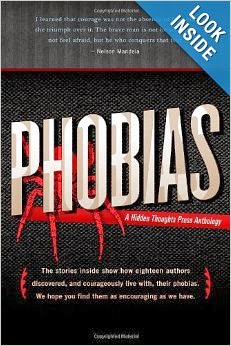
J.T. Evans’ short story, One-Thousand Eighty Degrees, was published in Phobias: A Collection of True Stories (ISBN: 978-0615949857, Paperback, ebook, 102 pages) on January 11, 2014 by Hidden Thoughts Press. It is available on Amazon.


Over 60 million people in the United States and Great Britain are estimated to have phobias. On these pages, you will find eighteen stories and one poem by individuals who courageously face each day, and each night, knowing life will throw many things, both good and difficult, in their path. And yet, they go on. Read, applaud, and be grateful for your own life.

J.T. is a writer of fantasy, science fiction, and horror. He has actively been writing since he discovered a local writers group in 2006. He joined the Pikes Peak Writers in late 2008 and attended his first conference in 2010. In that time, he has worked his way up the ranks in Pikes Peak Writers from "chair mover" and "auction guard" to webmaster and president of the organization. You can find him at http://jtevans.net/.

We love to hear of fellow Pikes Peak Writers' Sweet Successes, including story acceptances, winning contests, getting published and book signings. Please email Kathie Scrimgeour at ppwsweetsuccess@gmail.com if you've got a Sweet Success you'd like to share.

Wednesday, May 28, 2014

Characterization Through Setting

By Karen Albright Lin


You’re typing away on your amazing action scene. Your heart races. You love your protagonist and want to knock your antagonist down. But down to what? Unless your story takes place in zero gravity like the hit movie, readers don’t want to float ungrounded through a plot, even one with well-drawn characters. We crave a sense of place, we want it to matter, and we want its description to be reflective of the POV character’s personality.

A sense of when and where your story takes place offers context and tone, and helps us better imagine your tale. It helps us believe these people you’ve created are truly living it.

Readers need more than a character wandering through a nondescript park. Are there children giggling on a jungle gym? Is there a sheepdog wrapping its leash around its owner? What is the vegetation? How does it smell? Are there bird droppings dotting the sidewalk or dirt path?

It’s not as simple as creating a list of facts about the locale. We bump up our prose several notches closer to marketable by conveying POV characteristics and mood through HOW those details are described. To one character, splotches of bird poop might paint an abstract masterpiece leading straight to the cocoon of a turret-crowned church. Another may grumble as he navigates through the maze of filthy bird shit.

Make the experience of setting unique to your character. He is an eyewitness and, as is true of all witnesses, his perceptions will be affected by his mood and his nature.

Dialogue and action are only two layers of characterization. The narrative, your internals, should also include every one of your POV’s senses plus her interpretation of what is in her environment. For example, let us know which country we’re in through sounds and smells. Maybe it’s the turmeric-raison pungency of Morocco. Through setting we also get a feel for its culture.

Don’t bore us. Sprinkle details into your narrative a little at a time. Steinbeck’s pages-long descriptions would not be as tolerated by today’s impatient readers. A few vivid descriptors go a long way.

If your setting creates a believable backdrop for your tension, epiphany, or action, you’ve painted a tangible moment that your audience will experience vicariously through your POV’s senses.

Texture, weather, and atmosphere are all important parts of your setup. They add power to your narrative. Close your eyes, imagine you are your character. What’s around you? How do you feel about it? Then share it with us.


About the Writer:  Karen is an editor, ghostwriter, pitch coach, speaker and award-winning author of novels, cookbooks, and screenplays. She’s written over a dozen solo and collaborative scripts (with Janet Fogg, Christian Lyons and director Erich Toll); each has garnered international, national and regional recognition: Moondance Film Festival, BlueCat, All She Wrote, Lighthouse Writers, Boulder Asian Film Festival, SouthWest Writers Contest, and PPW Contest. Find out more at www.karenalbrightlin.com.

Monday, May 26, 2014

Let us Speak of Rejection...

By DeAnna Knippling


Skip this if you've heard me go off about it before, because I've said it before, and I'll say it again. But I keep hearing good writers get down in the dumps about their rejections, so here it comes 'round again:

Pikes Peak Writers’ Conference is over. That amazing Rocky Mountain high is done. Now is the cold dark aftermath (inasmuch as May is going to be cold and dark) of sending stuff out.

Submitting.

Waiting.

Getting rejected.

I’ve been writing and submitting short stories for years. One year, I made a goal to get a hundred short story rejections, because I read this article about how you should only set goals you can control, and I thought, I can’t force editors to buy my crap...but I can force them to reject it.

It was a strange year. I wrote stories and sent them because I wasn’t getting enough rejections back. I started prioritizing which markets I sent stories to based on not their pay rates but their turnaround time (no, thank you, Clarkesworld). 

I didn’t end up with 100 rejections; I ended up with something around 150 or so.

My one stipulation was that it had to be a paying market. As in, um, if you’d pay me a dollar for a story, I’d send it to you. (Admittedly, I started at the pro-rate markets and worked my way down by pay rates most of the time.)

And I made less than a 5% acceptance rate. (I track these things on Duotrope). Less than one in twenty.

For a while I was convinced that I was an idiot, and that what I was doing was pointless. Fortunately, I’m stubborn, and once I set that goal (and once people started yelling at me for publicly announcing how many rejections I had [the theory was that it made me look unprofessional]), I refused to stop.

This time.

A long time ago (in the mid-1990s), I sent out a couple stories (as in, two). One of them I sent three times; the other one I sent twelve. After that twelfth rejection (including one from Weird Tales that said, essentially, that my writing was too weird for them), I gave up writing for a while. Like...until 2003. I dawdled with a few stories here and there, but they sucked and I felt like writing was pointless, just something that I did to screw around when I got bored with the Internet. 

Eventually, I gave up on giving up, but that’s another story. The point is that after fifteen rejections on two stories, I threw in the towel.

During my year of collecting rejections, I was getting over twenty rejections on each story.

I was a mental wreck from all those rejections. Then something changed. It wasn’t anything I did.

Here’s what it was:

One of my favorite writers that I personally knew, submitting to the same markets that I was, started crowing about hitting an 8% acceptance rate. Less than one in ten, and she was still doing a victory dance.

“Oh,” I said. “When writers say you’re going to get a lot of rejections, that means even the really good ones are still getting a lot of rejections.”

So now, even though I still get depressed about rejections, I don’t actually stress over it. It’s a pain to keep all this crap in the mail. And, honestly, sometimes I “retire” stories that I’m too sad about not being published to keep sending out. And I am not the most rejected writer I know, not by a long shot. For every story you hear about professional-level writers getting accepted their first time out, there are a thousand who fought their way up the ladder tooth and nail, one rejection at a time: thousands and thousands of rejections.

Now, I’m not saying that submitting stories is for everyone. And I’m not saying you shouldn’t self-publish (of course I’m not saying that!). But if you’re submitting and worried that the rejections you’re getting mean that you’re a terrible writer--they don’t (okay, you might be a terrible writer, but you’re getting better faster than the next wannabe who revises and perfects, revises and perfects). Just take the knocks and get back up again. It doesn’t matter if you have thick skin or not. It doesn’t matter if you cry. (I’ve cried over rejections, especially the ones that are like, “Oh, we liked this and would like to hold onto it to consider it,” and then you get a form rejection back months later, or the ones that come all at once, or the ones for stories where I felt this is the one while I was writing it, or the ones that come back when life in general has me down, or...)

It only matters that you keep going.

Me? I have sent 226 short story submissions over the last twelve months, and my acceptance rate this morning is 6.2%. I've upped my standards to "at least semi-pro", so it's kind of apples to oranges for a comparison from where I started out. But you can bet your sweet monkey @$$ that I'll be doing a victory dance if I hit 8%.  

So send that manuscript.

And send it again.

And again.

Here's a secret: surviving rejection builds a muscle that lets you take bigger and bigger risks, that lets you dare to use your own voice and stop trying to be "perfect."

And that muscle? You’re going to need it.


About the Author: DeAnna Knippling started freelancing in May 2011 and wouldn’t be able to do it without her wonderful family and friends, especially her husband. In fact, she owes a lot to Pikes Peak Writers for helping her be a better writer, especially through the Write Brains, both in the lectures and in meeting lots of other writers.

Her reason for writing is to entertain by celebrating her family’s tradition of dry yet merry wit, and to help ease the suffering of lack of self-confidence, having suffered it many years herself. She also likes to poke around and ask difficult questions, because she hates it when people assume something must be so.

For more kicks in the writerly pants, see her blog at www.deannaknippling.com or her ebook How to Fail & Keep on Writing, available at Smashwords, B&N, Amazon, and OmniLit.


Sunday, May 25, 2014

Quote of the Week and Week to Come

“The secret of it all, is to write in the gush, the throb, the flood, of the moment – to put things down without deliberation – without worrying about their style – without waiting for a fit time or place. I always worked that way. I took the first scrap of paper, the first doorstep, the first desk, and wrote – wrote, wrote…By writing at the instant the very heartbeat of life is caught.”


Walt Whitman (Leaves of Grass, Song of Myself) 1819-1892
Photo by Mathew Brady (Public Domain)


This week on Writing From the Peak...

* Let Us Speak of Rejection  from DeAnna Knippling

* Characterization Through Setting  from Karen Albright Lin

*  Sweet Success - J.T. Evans  from Kathie Scrimgeour


Please note that there will be no Writer's Night tomorrow, due to Memorial Day. Writer's Night will return to Ivywild June 23. See you then!

Friday, May 23, 2014

Sweet Success! K. Michelle Lindstrom

Compiled by Kathie Scrimgeour


K. Michelle Lindstrom’s self-published memoir, Finding Rodolfo, (ISBN: 1495222985, Kindle, 337 pages), was released on December 29, 2013 and is available on Amazon.


Kristi was an ambitious lawyer for a top American firm. Until, after a medical complication and near her deathbed she decided there had to be more to life than a loveless existence practicing law. Enrolling in the prestigious Cordon Bleu school in Paris, she soon would find just how much more to life there could be. Her journey of self discovery leads to a world filled with the pleasures of food, wine, and love, the types of which could only be found in the city of lights.


We love to hear of fellow Pikes Peak Writers' Sweet Successes, including story acceptances, winning contests, getting published and book signings. Please email Kathie Scrimgeour at ppwsweetsuccess@gmail.com if you've got a Sweet Success you'd like to share.

Wednesday, May 21, 2014

Embrace Analog

By Linda Rohrbough


Those of us who write professionally are constantly looking for ways to stir our juices and embrace new things. That’s because it’s easy to get into what feels like a hole. The trick is finding a way out.
For example, my friends find it fascinating that I’m a writer, but my kids are not at all impressed. They think what I do is the most boring job in the world. My oldest daughter used to make fun of me by sitting at the table pretending to type, and then imitating her or her sister asking me questions.
“Mom, can I go jump off a cliff?”
“Mom, can I eat all the ice cream in the freezer?”
And then she’d mimic me with the same answer every time as she looked straight ahead or held up one hand while she pretended to be typing.
“Just a minute,” she’d say, imitating my voice. Then she’d laugh. It was a funny routine.
Only it wasn’t just a minute. They knew it and I knew it.
That’s the compelling attraction of digital. It sucks us in. I can look up after working on a project and find four or five hours have gone by and I haven’t moved. My life has been like that for more than two decades. Only now it’s not only those of us who love writing, but it’s everyone who has a computer or a smart phone who is experiencing the digital draw problem.
The wrinkle is there’s not much in that digital world that inspires the kind of creative juices needed to get moving on creative work. One of the best books I’ve read in a while about the creative life is Steal Like An Artist by Austin Kleon. I found it this summer and it’s one of the books I keep around for inspiration. In it, Kleon says we need more analog.
By OCAL, clker.com
What’s analog? A pencil is analog. A pair of scissors is analog. Paste, tape, glue, and markers are analog. So are magazines and paper books. Kleon says he has an analog space opposite his digital space and he doesn’t let one world cross into the other. In his case, he has two desks across from each other. One has his computer, keyboard and all the electronic stuff he needs for his work. The other has pencils, paper, markers, and a bunch of creative tools that require no electricity. And he says the analog space helps his digital work.
I heard that before, and I used to think it was nonsense. Until I tried it. My first time was when my fiction agent asked for a detailed proposal for a suspense novel he’d agreed to shop and I needed to finish the ten page synopsis he wanted. The novel was set at Denver International Airport (DIA) and I was in Littleton staying in a hotel. I was making trips to the airport to meet the airport public relations people, but I was stalled on the proposal.
I looked for ideas and I remembered I’d been in a workshop where the writer leading it suggested cutting images out of magazines that remind me of things in the novel or about the setting. It sounded stupid and childish, like one of the projects I did in grade school, and I just couldn’t see how it would help. But I was desperate.
I had decided to go to a bookstore to buy magazines when I walked past a rack of touristy magazines and travel brochures in the hotel lobby. I stopped short, gathered up an armload, borrowed a pair of scissors from the desk clerk, and went up to my room to begin cutting.
To my surprise, this analog activity did help. The images I found not only sharpened my senses and reminded me of things I loved about Colorado, but I remembered details about mountain lions (which are in the novel). And there was something about cutting out and arranging the photos that helped, as well. The activity details got me going again and I got the proposal done and sent off when I’d promised.
Kleon also says other analog activities help with the creative work, even though they look like a waste of time. I knew that already. I find myself loading the dishwasher or putting in a load of laundry when I’m stuck on a plot point. Walking is one of my favorite activities. So are yoga and hip-hop line dance class, which I make a point of being at no matter how busy I am. If I need to, I tell people I’m in a meeting. Because the times when I’ve sacrificed my yoga or line dance class for something to do with my business, I’ve always regretted it.
Now, it’s my belief that Colorado folks know how to do analog. But I suspect people from places other than Colorado are reading this. So, I’ve got to ask, what’s your favorite analog activity to help stir your creative juices?

About the Author: Linda Rohrbough has been writing since 1989, and has more than 5,000 articles and seven books to her credit along with national awards for her fiction and non-fiction. New York Times #1 bestselling author Debbie Macomber said about Linda’s new novel: "This is fast-paced, thrilling, edge-of-the-seat reading. The Prophetess One: At Risk had me flipping the pages and holding my breath." The Prophetess One: At Risk has garnered three national awards: the 2012 International Book Award, the 2011 Global eBook Award, and the 2011 Millennium Star Publishing Award. An iPhone App of her popular “Pitch Your Book” workshop is available in the Apple iTunes store. Visit her website: www.LindaRohrbough.com.