Showing posts with label plotting. Show all posts

Wednesday, April 30, 2014

Story is Conflict

By Karen Albright Lin


Some folks walk around looking for a battle, but most of us try to avoid conflict in our real lives. We dread the “conversation” we have to have with our son who just got a full-face tattoo of a praying mantis eating its mate. We back out of the class 5 rapids in favor of class ½. We resist the urge to use a few choice words when the IRS threatens an audit. We are cavemen doing whatever we can to avoid the cougar that will inevitably stalk us.

Self-preservation is an instinct. So it can be a challenge setting aside our reputation-preserving, risk-averse, considerate and conscientious selves to create the most essential element of fiction—CONFLICT.

Conflict is about high stakes. It’s not simply disagreement about whether a shirt is gray-blue or blue-gray. Ho hum. True conflict requires consequences. That’s not to say that all conflict has to be bigger than life—like your antagonist holding your hero over the edge of the Grand Canyon. Sometimes the conflicts are quiet yet just as devastating, perhaps thwarting plans by placing obstacles between characters and their goals. Revolutionary Road by the great writer, Richard Yates, is a relationship book, with neuroses as obstacles.

We can think of a book as a series of conflicts, some solved along the way, some building to a giant black moment and a heart-pounding climax. Great books have external main goals and external obstacles as well as internal main goals and obstacles. The external goals are typically obvious. In Back to the Future, Marty needs to go back and manipulate the past to be sure his parents get together, assuring his own existence. His “spiritual” needs concern learning to ignore coward taunts and, more importantly, finding a way to understand and respect his father.

Ideally the external and internal arcs intersect. One resolution leads to the other. Often each reaches a climax at about the same time. Very soon after Dorothy kills the Wicked Witch of the West, she realizes there’s no place like home. On a rare occasion the main conflict can be caused by something other than a human (V.I.K.I. in I, Robot), but usually the conflict is more easily relatable if there is a human face to the obstacle. In Jaws the antagonist isn’t as much the insentient shark as it is the mayor of Amity who refuses to shut down the beaches.

The theme of your story is derived from the character’s needs, what questions are posed, what’s at stake, what goal is thwarted, and what strength (or weakness) helps your hero prevail over the adversary. What are the greatest oppositions? The worst consequences if your seemingly impossible goal isn’t met? These are the keys to finding the greatest conflict in your story. And conflict is your story.
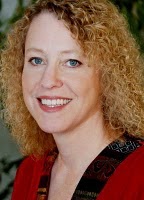

About the Writer:  Karen is an editor, ghostwriter, pitch coach, speaker and award-winning author of novels, cookbooks, and screenplays. She’s written over a dozen solo and collaborative scripts (with Janet Fogg, Christian Lyons and director Erich Toll); each has garnered international, national and regional recognition: Moondance Film Festival, BlueCat, All She Wrote, Lighthouse Writers, Boulder Asian Film Festival, SouthWest Writers Contest, and PPW Contest. Find out more at www.karenalbrightlin.com.

Wednesday, November 21, 2012

Pick a Flavor: Three Ways to Plot Your Novel


By Debbie Maxwell Allen 

Just as each of us lean toward a particular flavor of ice cream (or none at all), so it is with plotting our novels. You may just write freely, with no forethought, or develop pages of outlines. Today, we'll look at three ways to plot a novel. You just might hit on the perfect method.

Index Cards. The old standby is still going strong. This is probably the most popular method of plotting. Whether you use colored cards or plain white, they can be shifted around and added to until the plot is just right. I researched a few writers who do a great job of explaining how they plot with index cards.

Author and teacher Holly Lisle takes you step-by-step through Notecarding: Plotting Under Pressure. With her system, you don't even have to have an idea of what's going to happen in your story. Also from Holly Lisle: a Plot Mini-Course sent to you via email.

Author Marilyn Byerly uses index cards and a more character-driven approach to come up with a great plot. Once you know your characters well, inventing conflict for them is easy. Check out Using Index Cards to Plot a Novel.

Writer Phoebe A. Durand posts on A Guide to Creating Changeable Novel Outlines. If you have small children who like to shuffle your cards, or worry the wind will scatter them, don't worry. You can use the virtual index cards in the free trial of Scrivener, a great writing program. 

Sticky Notes. These little squares have a lot going for them. They're bright and colorful, and they won't get mixed up if a draft blows through. Here are a few ways to make use of them.

Author Sara Cypher uses sticky notes to plan around a plot arc and a theme at the same time. Her method is very visual, and I plan to try her How to Plot a Novel soon.

Farrah Rochon, with Novel Spaces, starts with making notes on "what has to happen" and "possible scenes". She then makes a poster with a story arc and uses different colors to keep track of characters. Check out the photos in How I Plot a Novel. 

And Holly Bodger has an ingenious method for keeping track of your main plot and your subplots, so you won't leave any loose threads in Creating a Plot Graph for Your Novel. 

Virtual Plotting. Besides the virtual index cards in the Scrivener Software, there are several programs that allow writers to visually map all their ideas for plot and character right on the computer. This is perfect for writers without a lot of space to spread out, or who want to carry their ideas along with them.

Author Simon Haynes uses FreeMind software (a free download) to plan his novels. Using screenshots, he takes you through the steps he uses to plot his novel.

John Barnett also uses FreeMind software, and has created a YouTube video to take writers step-by-step through his plotting method. 

Or, you can try outlining like author Janet Evanovich, who describes her method as "the easy way".


If you need a few more tips, especially for NaNoWriMo, check out Jennifer Blanchard's Tools to Help You Plot Your NaNoWriMo Novel. Great info.

You might also be interested in free resources from the Plot Whisperer, a free course in 20 Master Plots, or free plot tools from Save the Cat. And a popular method for NaNoWriMo's is Rubik's Cube Plotting in 9 Easy Steps.

So how do you plot your novel? Let us know in the comments.


Debbie Maxwell Allen writes young adult historical fantasy in the Rocky Mountains. She blogs about free resources for writers at http://writingwhilethericeboils.blogspot.com/. 

Wednesday, November 7, 2012

Novels with a Beat

By Deb McLeod

Our October Writer’s Book Club featured Rebecca Green Gasper who introduced us to Blake Snyder’s Beat Sheets for screenwriting. We analyzed The Hunger Games and used the 15-point story arc to better see the shape of the story.

I’ve used the three-act structure as well as the journey as a plotting tool with my clients. But this was the first time I’d seen this 15-point story arc. The Hunger Games fit the beat sheet perfectly. We could easily identify the beats of the story and they conformed to the story arc in the Beat Sheet.

The theme was stated early in the novel. The main character, Katniss, stays within the rules. She is not a rebel. She’s hungry and people rely on her. She does what she has to do to survive. By the end of the book Katniss has become the face of the rebellion against a way of life that she can’t live under any longer. It’s a complete reversal. Her character follows the Beat Sheet arc.

After the book club I put my novel to the test. I downloaded a copy of the Beat Sheet and started filling it out. I had run into a wall of sorts just at the end of Act 2 and had been immersed in working my way out for about two weeks. When my energy for the work begins to wane that’s a signal to me that I took a wrong turn somewhere earlier in the plot. This was the perfect time for me to try the tool out.

My book is complicated. It’s the first of an eight-book thriller series. There are paranormal elements to it. There’s a love story and a conspiracy. There are plenty of characters, and there’s a B, C and a D story braided between the highs and lows of the A story.

Plotting has been a challenge.

First, I tried to slap the whole plot onto the Beat Sheet, but then I realized that I needed to pull apart the storylines and subplots and do a Beat Sheet for each one. Magical brilliance!!!

I started with the love story; the easiest to pull out and look at. The Beat Sheet fit all the way down to my stalling point. I had veered off the path right around the end of Act 2; I had forgotten my character’s theme.
At twenty-four, Macy Delacort has won at the game of life. She has everything a girl could want, but, in order to get it, she gave up an important part of her essence. Through the story she will begin to see exactly what her choices have cost her. By the end of the book she will learn to be true to herself and find her true love.

As I was writing scenes and moving in and out of all the other subplots, I forgot Macy’s theme and what her place was in the story. But now I had a plan. She’d been sidetracked from her mission. The challenge had faded and there was nothing to help her change by the end of the book.

Now I can see what I need to do. I still have scenes to think up and in plotting the other subplots as well as the main story, I might be able to find which scenes will give Macy an opportunity to lose everything but to get herself by the end of the story.

I have been so taken with this method that I hosted a Beat Party for some people who are about to do NaNoWriMo. We’d all like to have our road maps in place before we start so I met with a few people to teach them the Beat Sheet. We have plans to get together two or three more times and help each other beat out our plots before NaNo starts.

I never used to be a plotter. But I am now. It’s a wonderful feeling to know where you’re going and still leave room for surprises. I found the Beat Sheet to be a perfect tool for my book and just what I needed. Try it out. See if it works for you too. 

About the Writer:  Deb McLeod, is a writer, creative writing coach, co-founder and executive director of The Writing School. She has both an MFA and a BA in creative writing. She has been teaching and coaching for over ten years. Deb has published short fiction in anthologies and journals. She has written articles and creative nonfiction. Deb has been a professional blogger, tech writer, graphic artist and Internet marketing specialist.