Showing posts with label Ann S. Hill. Show all posts

Monday, January 30, 2017

Dear Annie! Pikes Peak Writers Advice Column


Dear Annie:

My critique partners sometimes tell me that they want to know more about this or that element in my story. Isn’t that a good thing? Don’t I want the reader to have questions to keep them turning the pages?

Signed,

Scratching Their Heads

Dear Scratching:

If the questions you raise keep the reader intrigued, you are correct; they do keep him reading. If those questions are not answered or at least developed soon enough, you risk losing the reader. Let’s examine one famous book, To Kill a Mockingbird.

It opens: “When he was nearly thirteen, my brother Jem got his arm badly broken at the elbow. When it healed, and Jem’s fears of never being able to play football were assuaged, he was seldom self-conscious about his injury.”

Already, I’m asking myself why this narrator, a young girl, would open her story by telling about her brother. Their relationship seems unusually close. Why? This will be revealed as we move on, but in the meantime the question keeps me reading.

At the end of the next paragraph, the young girl says that she and Jem discussed what had been a precipitating cause for the accident: “He said it began the summer Dill came to us, when Dill first gave us the idea of making Boo Radley come out.”

Who is Boo? I ask. What a strange name. My curiosity is peaked. Now, if the character (Scout) had not explained how the arm had been broken and left it hanging (bad image), I wouldn’t want to read on as I wouldn’t trust the narrator to tell the story well.

While certain major plot questions may not be fully answered until nearer the end of your book, there must be continual progress in the direction of that resolution.

~ Annie 

Dear Annie:
What is a better way to find a new subject for my novel? I’ve tried some of the suggested techniques, but I’m still not satisfied with my results.

Signed,
Blocked in Texas

Dear Blocked:
Carl Jung said, “The creative mind plays with the objects it loves.” You are experiencing a common problem—one that keeps writers awake at night. My best advice is this: Ponder the subjects that most impassion you. Are they truth and justice? Or political corruption? Maybe Medicare fraud?

Once you select your topic, you have the foundation for a theme, an important element to any significant book. (See my archived PPW article on theme) Now invent a story line which will form the conduit to relay that message. Begin with a strong opening which subtly implies your chosen theme and go from there. Not as simple as it sounds, but you’ll have a solid start to a meaningful work.

~ Annie

Dear Annie:
I have a story idea in mind, but I can’t decide on a setting. They say to write about that which you know. Is that how I should make my decision? I’ve lived in only two boring locations.
Or should I travel to another more interesting setting like Italy and do research? After all, I could write it off.

Tempted to Travel

Dear Tempted:

I see your point. However, I suggest you choose a setting appropriate to your theme. The setting should set the proper mood for the story you are about to tell.

In my first novel set in Colorado Springs, a young girl is madly in love but is forbidden to date her high school sweetheart. She is devastated but later learns that her mother was right; her intended proves to be a clod. The social milieu shapes the values of the people who live there. Fortunately for this girl, her mother’s conservative values save her from a dubious fate and send her on a personal journey that will lead to a suitable mate and career.

The setting of the English countryside where Elizabeth Bennet resides explains the excitement and anticipation she and her sisters feel when they learn of a new tenant of a nearby estate—one capable of introducing some society into their small town. The Nineteenth Century timeframe explains the girls’ motivations to find husbands, perhaps at one of these social gatherings. Jane’s unwillingness to settle for many proposals she receives defines her character and makes her final decision to marry Darcy all the more glorious.

The deep south of the United States during the 1930s is the appropriate setting for Harper Lee’s To Kill a Mockingbird. There she explores the tension of racial issues. And yes, she grew up there, so she is qualified to tell the story. On the other hand, an author with enough research can choose any setting and tell the story well if the idea motivates him or her enough.

If Italy is a perfect setting for your current story, go ahead and book the trip. If the setting doesn’t fit your story, you can always go for leisure. Maybe the perfect story for that setting will dawn on you while there. Or perhaps you’ll think of an idea set on a plane on the way over and change course altogether. You must follow your central idea to the end by choosing the proper location, tone, and timeframe to compliment your story best.

~ Annie 

Have a question for me? Write to me at annshill@q.com with your suggestions. I will answer serious questions, and maybe some funny ones, to the best of my ability. Your writing is of utmost importance to me because it is important to you.

Looking forward to hearing from you,

~ Ms. Annie

About the Author:   Dear Annie is the pseudonym for Ann S. Hill. After hearing the call to write in her thirties, Ann set the ambition aside while life happened. Now that she has retired from her career as a dentist and her children are adults, she is seriously attacking that parked ambition. She spends significant time on her true passion and has recently completed her second novel. Her first novel, Wait for Me, was a finalist in the Zebulon, Pikes Peak Writers Contest. She has written several short stories. In the meantime, she remains a voracious reader and film aficionado. 

Sunday, January 29, 2017

Quote of the Week and the Week to Come

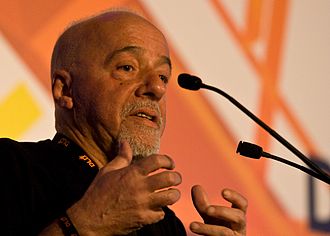
Impossible is just an opinion ~ Paulo Coelho

Paulo Coelho de Souza, born Aug 24, 1947, is a Brazilian lyricist and novelist. He is the recipient of numerous international awards, amongst them the Crystal Award by the World Economic Forum. His novel The Alchemist has been translated into 81 languages. 

  
Paulo Coelho in 2008 Source: Wikipedia 

This week on Writing from the Peak

Jan. 30             Dear Annie by Ann S. Hill

Feb. 1               The Process of Writing a Novel by 
                          Deb McLeod the Writing Coach

Feb. 3               Pikes Peak Writers Events

Friday, December 30, 2016

Sweet Success Celebrates Laura DiSilverio

By: Ann S. Hill 

Congratulations to Laura DiSilverio on her Sept 2016 release of Close Call. The 327-page suspense novel was published by Midnight Ink in trade paper. (ISBN 978-0-7387-4920-4)

Synopsis and author bio follows:

After living through the media shaming of a political sex scandal when she was in college, Sydney Ellison fears notoriety above all. So when she stumbles onto a plot to assassinate a senator, she resists contacting the police. Before she can make herself do the right thing, the assassin tracks her down and kills her fiancé. Now a murder suspect and a killer's target, Sydney reluctantly enlists the aid of her estranged sister. Sydney must overcome her distrust and put all she has worked for on the line to stop the killer and his employer before more people die.

A retired Air Force intelligence officer, Laura DiSilverio is the national bestselling author of 17 mystery and suspense novels. Library Journal has recognized her most recent standalone, Close Call, as one of the Top Five mysteries of 2016. Additionally, The Reckoning Stones (2015) won the Colorado Book Award for Mystery in 2016. Incubation, the first book of her young adult dystopian trilogy is an Amazon bestseller. A Past President of Sisters in Crime, she pens articles for Writer’s Digest, and teaches writing in various fora. She plots murders and parents teens in Colorado, trying to keep the two tasks separate.
-Website (author promo, blog, etc.) lauradisilverio.com
-Where to buy/read website Amazon, B&N, Tattered Cover, etc.


Friday, December 23, 2016

Sweet Success Celebrates Darby Karchut

By Ann S. Hill

Darby Karchut has been selected as an invited author for several 2017 events:

2017 CCIRA’s annual Conference on Literary–Golden Anniversary
February 1-4, Marriott Denver Tech Center
Denver, CO

2017 Authors’ Festival: A Writing Mini-Conference for Kids Grades 3-8
(in conjunction with the CCIRA conference)
February 4, Marriott Denver Tech Center
Denver, CO

2017 Pikes Peak Writers Conference-Silver Jubilee
April 28-30, Colorado Springs Marriott
Colorado Springs, CO

She also recently celebrated the release of the fourth and final book in her middle grade adventure fantasy series (The Adventures of Finn MacCullen) at Barnes & Noble-Briargate on November 19.

FINN’S CHOICE. (ISBN: 9781633920705; 230 pages; trade paperback) released September 20 from Spencer Hill Press. It is available at Amazon, Barnes & Noble , and indie bookstores worldwide. School Library Journal called the first book in the series, FINN FINNEGAN, “...a great choice for adventure-loving readers who prefer their battle scenes with a hefty dose of ancient weaponry, ground-fighting skills, and just a touch of magic."


Darby Karchut is an award-winning author, dreamer, and compulsive dawn greeter.  A native of New Mexico, she now lives in the foothills of the Rocky Mountains, where she runs in blizzards and bikes in lightning storms. When not dodging death by Colorado, Darby is busy writing for children, teens, and adults. Best thing ever: her YA series, GRIFFIN RISING, has been optioned for film. She is represented by Amanda Rutter at Red Sofa Literary. Visit Darby at www.darbykarchut.com.


Friday, December 9, 2016

Sweet Success Celebrates John Stith

By: Ann S. Hill 

John Stith’s Redshift Rendezvous will be re-released by ReAnimus Press on November 15, 2016 in trade paperback and ebook formats. The paperback ISBN is 978-0-9672984-4-3.

“The list of science fiction authors who play the game the hard way by sticking to the rules of science is all too short. Now to that group which includes Clarke, Niven, Asimov, Bear, and Clement should be added the name John E. Stith. — Dan Simmons, NY Times No. 1 best-selling author.

Warning: Read This Guide Before Boarding the Redshift

The environment aboard a hyperspace craft is quite safe as long as you are careful.


The management reminds you that the speed of light on board this craft is ten meters per second (or about 30 million times slower than what you are used to). This means you will frequently encounter relativistic effects and optical illusions.

Aboard the hyperspace liner Redshift is a relativistic world of slow light and treachery. The first sign of trouble is the apparent suicide of a passenger. When the first officer discovers that she was murdered — her wants answers. Before long, a desperate group of hijackers use the hyperspace liner to plunder a fabled colony — and only one man stands in their way.

John is one of the prolific writers among us. His books have been translated into many languages including braille. John’s stories are packed with suspense, mystery, and humor. He hold s a B.A. in physics from the University of Minnesota and has served as an Air Force Officer where he worked at NORAD. His books have been sold to film and television, and he has titles prepared for release Nov 15, Dec 15, Feb1, March 15, May 1, and June 15. I’m sure we’d all like to check them out.


Sunday, November 13, 2016

Quote of the Week and the Week to Come

It’s none of their business that you have to learn to write. Let them think you were born that way.  – Ernest Hemingway

Source: Pixabay and Wikipedia

Ernest Miller Hemingway (July 21, 1899 – July 2, 1961) was an American novelist, short story writer, and journalist. His economical and understated style had a strong influence on 20th-century fiction, while his life of adventure and his public image influenced later generations. Hemingway produced most of his work between the mid-1920s and the mid-1950s, and won the Nobel Prize in Literature in 1954. He published seven novels, six short story collections, and two non-fiction works. Additional works, including three novels, four short story collections, and three non-fiction works, were published posthumously. Many of his works are considered classics of American literature.


This week on Writing from the Peak:


Nov. 14     Meet the Member: Karin Huxman


Nov. 16     Hello, my name is . . . How the PPWC brought a member into her own


Nov. 18     Sweet Success Celebrates Natalia Brothers


Friday, November 11, 2016

A Farewell and a Hello

Editor's Note: It has been my privilege to work with the reliable and talented Kathie Scrimgeour. Thank you for devoting your time to Pikes Peak Writers and Writing from the Peak. Best wishes!


 My Time with Sweet Success 2013-2016

What fun the past three years have been! I have gotten to know so many of you through your Sweet Success stories and will miss the wonderful news that regularly came to my inbox.

I feel that your successes have given us inspiration to write when we couldn’t, hope in being published when we thought it impossible, and new avenues to follow when we faced our own publication challenges.

Thank you for allowing me to be the conduit through which your successes were shared. I wish you all much SWEET SUCCESS in every aspect of your writing careers. It has been a privilege being a part of it.

Sweet Success will continue in Ann Hill’s capable hands. She will take great care to be sure all your success stories are handled with the professionalism that they deserve. I look forward to reading about your Sweet Success!
                                                              
                                                                                            ~ Kathie Scrimgeour


And a Welcome to Ann
 
As I begin my time with Sweet Success….I hope that I will do as fine a job as Kathie has done, and I wish her the best as she focuses in her new direction. 

I’m proud to continue the reporting of triumphs of our members so that these works will be widely celebrated. 

Much time and diligence has been spent to bring just rewards fitting of being honored.

Sincere best wishes to Kathie and thanks to our readers. I appreciate the privilege of taking up Kathie’s role. 

                                  ~ Ann Hill


Monday, November 7, 2016

November Letter from the Editor

It’s NaNoWriMo month, so this may be the shortest Letter from the Editor ever! I’m trying to do 1600 words a day, and, unfortunately, these don’t count. What does count is that every November, many of us remember we’re writers. We put other things aside, we give our families the evil eye and say, this is my month.

My month! Imagine if we did that year-round, made writing a priority . . . every month. Writers are notoriously giving people. I think that’s why we write in the first place, because we’re studiers of human nature and we thrive on communication. In that same vein, many of us are people pleasers and can easily put our careers second, third, fourth... until sometimes it's buried.

Realty Check: The truly successful authors put their writing first.

So, while we’re doing NaNo this month, or some version of it, I’d like to send out this challenge. How far could you go if your writing came first?

We have some terrific articles on Writing from the Peak this month. If you haven’t read Writing Coach Deb McLeod’s Lessons Learned from NaNoWriMo, please do so. Jason Evans is back with his history column this Wednesday; we’ll introduce another Pikes Peak Writers' member in, what else? Meet the Member. Catherine Dilts ends her fantastic ergonomics series with more valuable tips and exercises for our sedentary lifestyles; Darby Karchut visits with some desert musings from a recent trip; and we have three new columnists. (I can't wait to share!)

On a sad note, our Sweet Success Coordinator, Kathie Scrimgeour, after years of spearheading Sweet Success, is stepping down. Sweet Success is a wonderful facet of Writing from the Peak, and we will miss Kathie. But never fear, she'll stay on in Meet the Member. Ann Hill, who has been a contributor for the last few months will be taking Kathie's place. Please remember, if you have good news as a Pikes Peak Writers' member -- a publishing contract, a contest final or win, even if you've finished your novel or got a sterling review, Sweet Success is your vehicle, and we want to know about it. Contact Ann at annshill@q.com or me at editor@pikespeakwriters.com

If you’re doing NaNoWriMo, I wish you the best of luck. And to enable your trek further, I’ll leave you with this quote from Pulitizer-Prize winner Charles Duhigg, author of The Power of Habit. “Change may not be fast and it’s not always easy. But with time and effort almost any habit can be reshaped.”

How far could you go if you your writing came first? 

Have a fabulous November.

About the Author: Donnell Ann Bell is the managing editor for Writing from the Peak, the coordinator for the monthly Open Critique held on the first Wednesday of every month, and one of Pikes Peak Writer's board members at large. She is a best selling romantic suspense and mystery author. To learn more about her books, find her at www.donnellannbell.com


Monday, September 19, 2016

Dear Annie - Annie's advice for September


Dear Annie:

While at my critique group meetings, I tend to get upset and defensive despite being a ten-year critique group veteran. This is a new turn for me as I used to take the feedback in stride. A day or two after the meeting, I re-think my responses and ponder the feedback only to realize my wonderful critique partners are right. How do I correct my attitude during the meetings?

Signed,
Bad Attitude in Monument, CO

Dear Bad Attitude:

You’re experiencing a common human response. Inherent in your question lies a hint of the solution. When tempted to respond by defending or explaining your author intent, remember the confession that you just shared: later you realize that the criticisms were just. Take a deep breath and bite your tongue, remembering this point.

If you’re a member of a group that consistently gives appropriate and constructive criticism, remind yourself of your good fortune. Not all groups have the experience to give such excellent guidance. Many writers are desperate to find a competent group like yours.

Lastly, your years of experience may be part of the problem. Are you expecting fewer criticisms at this point in your writing career?

When your work becomes cleaner, the evaluation is likely to become finer tuned. I’m sure you notice that each revision brings your WIP to a higher level of competence. Each edit builds on the last making the writing more tight, more exact, more refined. Perhaps you’re receiving just as many comments as you did when you first began to write, but your critique partners are now judging your writing with higher expectations in mind.

~ Annie

Dear Annie:
I’m totally lost when confronted with the project of creating an author platform. It’s such an important requirement today. Where can I find help?

Signed,
Techno Challenged


Dear Techno Challenged:

Sounds as though you unfortunately missed the August Write Brain. That’s a shame because Cindi Madsen presented an in-depth look at this daunting project. She provided a wealth of interesting and helpful web sites, explained the necessity of creating advertisements geared to your audience, and suggested pre-order campaigns and give-aways. She also pointed to the advantage of creating a newsletter. Ask your friends who might have attended to lend you their notes.

In addition, see the Pikes Peak blog, Writing From the Peak. The August 15th article by K.L. Cooper, “How Pinteresting,” will also be of significant help. Just use the search bar on the right of the blog to look up this article in the archives.

Several comprehensive courses on the subject of building your internet presence can also be found online.

~ Annie 

Dear Annie:
Please explain what is meant by the three-act structure. I’ve heard just enough to confuse me. I understand the concept of a climax and denouement. But what I hear today uses new terms and seems more complicated.

Signed,
Wanting Clarity

Dear Wanting Clarity:
Many theories exist on the use of the three-act structure. A simple explanation is the following: act one is a set up for an eventual inciting incident which propels us into act two. Act two is the longest act and presents the main confrontation central to the theme. Generally, there is a plot twist mid act, then a crisis near the end of act two. This critical event ushers the reader into act three and the resolution or denouement.

I recommend Blake Snyder’s book, Save the Cat! for a thorough, clear, and concise explanation. An older book on the subject that is still a pertinent classic is Sid Field’s Screenplay. In both cases, you’ll need to adjust the pages outlined for each act or plot point to be proportional for a novel; but the outline and process are the same.

~ Annie


Dear Annie:
How can I create enough conflict to satisfy contemporary readers without contributing to the excessive violence that characterizes our society today?

Signed, 
God-fearing Pacifist

Dear Pacifist:
Conflict goes way beyond physical violence. There can be emotional, philosophical, or competitive conflicts within an individual or between two or more persons or groups of people. Identify the goal your character has chosen. What does he want? Conflict is anything that stands in his way.

If your character wants to become president of the United States, his conflicts are likely to involve negative advertising, inaccurate media coverage, ridicule from the opposing party or even his own self-doubts. A potential assassin in the crowd would rank right up there, too.

Consider the difference between violence for its own sake and violence executed by that assassin in the crowd. If the murderous use of arms fits the circumstances in your story, it will be more readily accepted even by a peace-loving reader.

~ Annie 

Have a question for me? Write to me at annshill@q.com with your suggestions. I will answer serious questions, and maybe some funny ones, to the best of my ability. Your writing is of utmost importance to mee because it is important to you.

Looking forward to hearing from you,

~ Ms. Annie


About the Author:  Dear Annie is the pseudonym for Ann S. Hill. After hearing the call to write in her thirties, Ann set the ambition aside while life happened. Now that she has retired from her career as a dentist and her children are adults, she is seriously attacking that parked ambition. She spends significant time on her true passion and has recently completed her second novel. Her first novel, Wait for Me, was a finalist in the Zebulon, Pikes Peak Writers Contest. She has written several short stories. In the meantime, she remains a voracious reader and film aficionado. 

Monday, July 18, 2016

Pikes Peak Writers Advice Column: Dear Annie


Dear Annie:

Why do my metaphors and similes go splat? My critique group claims they simply are not working. I thought they were clever. What’s wrong?

Signed,
Not So Clever


Dear Not So Clever:

You might be right. Your metaphors may be astute, but ask yourself whether the comparison you’ve created does what you want it to do. Are your metaphors appropriate for the mood, the setting, and the character involved? Having an eight-year-old girl note that her teacher dresses like a prostitute may perfectly describe the teacher, but would this little girl have the background to make that observation? Similarly, would Harry Potter compare Ron Weasley’s flaming red hair to that of Anne of Green Gables? If you construct your metaphor to be appropriate as well as descriptive, you’ll accomplish your purpose while avoiding slippery banana peels, too. Oops! Splat!


Dear Annie:

My story is complete but the word count is less than expected for my genre. How can I fix that without ruining my plot structure?

Signed,
Coming Up Short in Manitou Springs


Dear Coming Up Short:

Have you developed each goal, motive, and conflict well? A careful analysis can prompt a writer to create an entire new chapter. Maybe there is a relevant aspect to the personality of your main character, for example, that you have not yet fully defined. Added words may be required throughout the manuscript to accomplish this. Or you may need an additional scene to demonstrate clearly this side to his personality. Also check that all plot points are adequately developed and that they demonstrate their relevance to the main goal of the protagonist.

Warning: be sure that you’re enhancing an appropriate element to the story and not simply padding to accomplish a certain word count.


Dear Annie:

My critics say that I hammer home the same emotions and motivations in the main character as she moves through the story. How can I be sure that I’m not being tedious and overdoing this? I don’t care to bore my reader.

Signed,
Hoping to Thrill


Dear Hoping to Thrill:

To interest a reader, characters need to be complex and multi-layered. While protagonists have one main goal, achieving that goal should involve complications in the plot which inspire growth and reveal the intricacies of their motivations. Don’t forget that subplots which run concurrently to the main plot also demonstrate the character’s minor goals and reveal breadth of personality. Including subplots deepens your story and necessarily increases word count though that should be a secondary objective.


Dear Annie:

I’ve written five novels without a problem. Now I feel tapped out, devoid of inspiration. I’ve heard that every writer has one good novel in him/her. Guess I had five. Any suggestions?

Signed,

Throwing in the Towel in Grand Junction


Dear Throwing:

Whoa. Sounds like you need some serious R ’n R. If you could accomplish this uncommon feat five times, you can surely do it again. Think of a cause that arouses your passion or that makes your blood pressure soar. Go for a long leisurely hike in a quiet natural setting and let your mind massage that issue or subject. Put zero pressure on yourself. If you don’t get an inkling of an idea, try again tomorrow. This process may take a week or two, but chances are, the potential theme will present itself as though from a deep Godlike voice descending from the clear blue sky overhead.

Once you formulate a concept, identify a theme, and establish a goal for the main character, sit down and write. The very act of writing should lead your mind in surprisingly creative directions. If writing a detailed outline is your stumbling block, skip it. Let the creativity flow. If you get off course, you can always rewrite. On the other hand, if your characters are guiding you in this alternate direction, take their counsel.


Dear Annie:

Do you ever run out of questions for your article?

Signed,
Just Wondering in Colorado Springs


Dear Wondering:

Not yet. But write to me at annshill@q.com with your suggestions. I will answer serious questions, and maybe some funny ones, to the best of my ability. Your writing is of utmost importance to me because it is important to you.

Looking forward to hearing from you,

~ Ms. Annie


About the Author:  Dear Annie is the pseudonym for Ann S. Hill. After hearing the call to write in her thirties, Ann set the ambition aside while life happened. Now that she has retired from her career as a dentist and her children are adults, she is seriously attacking that parked ambition. She spends significant time on her true passion and has recently completed her second novel. Her first novel, Wait for Me, was a finalist in the Zebulon, Pikes Peak Writers Contest. She has written several short stories. In the meantime, she remains a voracious reader and film aficionado. 

Monday, June 27, 2016

Pikes Peak Writers Newest Advice Column


Dear Annie:

I’ve just begun to write after waiting for the opportunity for years. Where do I begin? Is it better to simply sit down and write? Or should I take brush-up courses on technique or find a critique group to work with before I begin?

~ Eager to Write

Dear Eager to Write:
Things change in the industry over time. Familiarize yourself with the current expectations of publishing houses. Learn the requirements of the genre in which you hope to write; learn about the currently preferred viewpoints and tenses; and above all, brush up on your basic writing skills. Without a thorough understanding of rules for grammar and sentence structure, your attempt to hone creative skills will lack a necessary foundation. You’ll drive those improper word arrangements deeper and deeper into your subconscious mind. That, dear reader, is a recipe for stagnation rather than growth.

Dear Annie:
I’ve brushed up on my writing technique and I’ve found a critique group. I’ve completed my first short story and researched sources to which I might submit. Am I ready to push the send button?
                                                                              ~ Ready to Go

Dear Ready to Go:

Have you read through your manuscript when you were fresh, after a good night’s sleep? Try reading several times for content and another several for grammar and spelling problems. Though I do this multiple times, I still find a need for improvements on each go round. Our work is never done, fellow grasshopper. If you have edited and re-edited your story until you are positive that it is your best writing, yes. Take a deep breath and press send.

Dear Annie:
I’ve sent off my first story, and now I’m having trouble thinking of another plot. What to do?
                               ~Lacking Imagination in Colorado

Dear Lacking Imagination:

Don’t fret. If you tense up, you’ll have a more difficult time. Let your mind wander while thinking of a theme that is important to you —a subject or cause that touches you. Get out into the world and observe people and their lives. Interview those who have experienced something about which you hope to write.

I’m not suggesting that you interview a serial killer unless he or she has been safely locked away in a high security prison. As writers, we are comfortable before a computer creating worlds and structuring events in fictional lives. We need a balance between reality and imagination. It is from our own and vicarious life experiences that we draw our ideas and passions. Only by feeling a situation deeply can we recreate that emotion in our readers. So take a hike at Garden of the Gods. You may meet a homeless person whose story inspires you.


Dear Annie:

Sometimes I get so involved in building my platform that I don’t have adequate time to write. Do I really need to cultivate this huge following to be successful? Or is it better to commit my time to improving my written word?
~Dazed and Confused

Dear Dazed and Confused:
In my opinion, the amount of time called for depends on where one is on the road to success. Be reasonable about the time you invest toward this purpose. If one creates a platform but fails to deliver a worthy product, his followers will dwindle faster than they were accumulated. On the other hand, the ability you foster in yourself can never be lost. If you write well, readers will find you just as the famous baseball players found Kevin Costner’s field of dreams.

Dear Annie:
I’ve put heart and soul into a novel for three long years. When I sent out my manuscript, I received only rejections. Where does a writer find the courage to go on? The “devil” keeps whispering, “You’ll never get published.” It’s too easy to believe his discouraging message while knowing the actual odds.
~Disillusioned

Dear Disillusioned:
If you are driven to continue writing after a day or two of lamenting over your disappointment, you are a writer whether you are published or not. No one with your drive can avoid improving his skills. You have heard “the call,” my friend. Keep writing if only for self-fulfillment. Don’t ever give up.

Remember, your day may come; but if fate disappoints you, you'll have had a whole lot of fun.


About the Author:  Dear Annie is the pseudonym for Ann S. Hill. After hearing the call to write in her thirties, Ann set the ambition aside while life happened. Now that she has retired from her career as a dentist and her children are adults, she is seriously attacking that parked ambition. She spends significant time on her true passion and has recently completed her first novel, Wait for Me. She has written several short stories and is currently working on a concept for her second novel. In the meantime, she remains a voracious reader and film aficionado.